Genetics and DNA: How Inheritance, Genes, Mutations, and CRISPR Shape Life
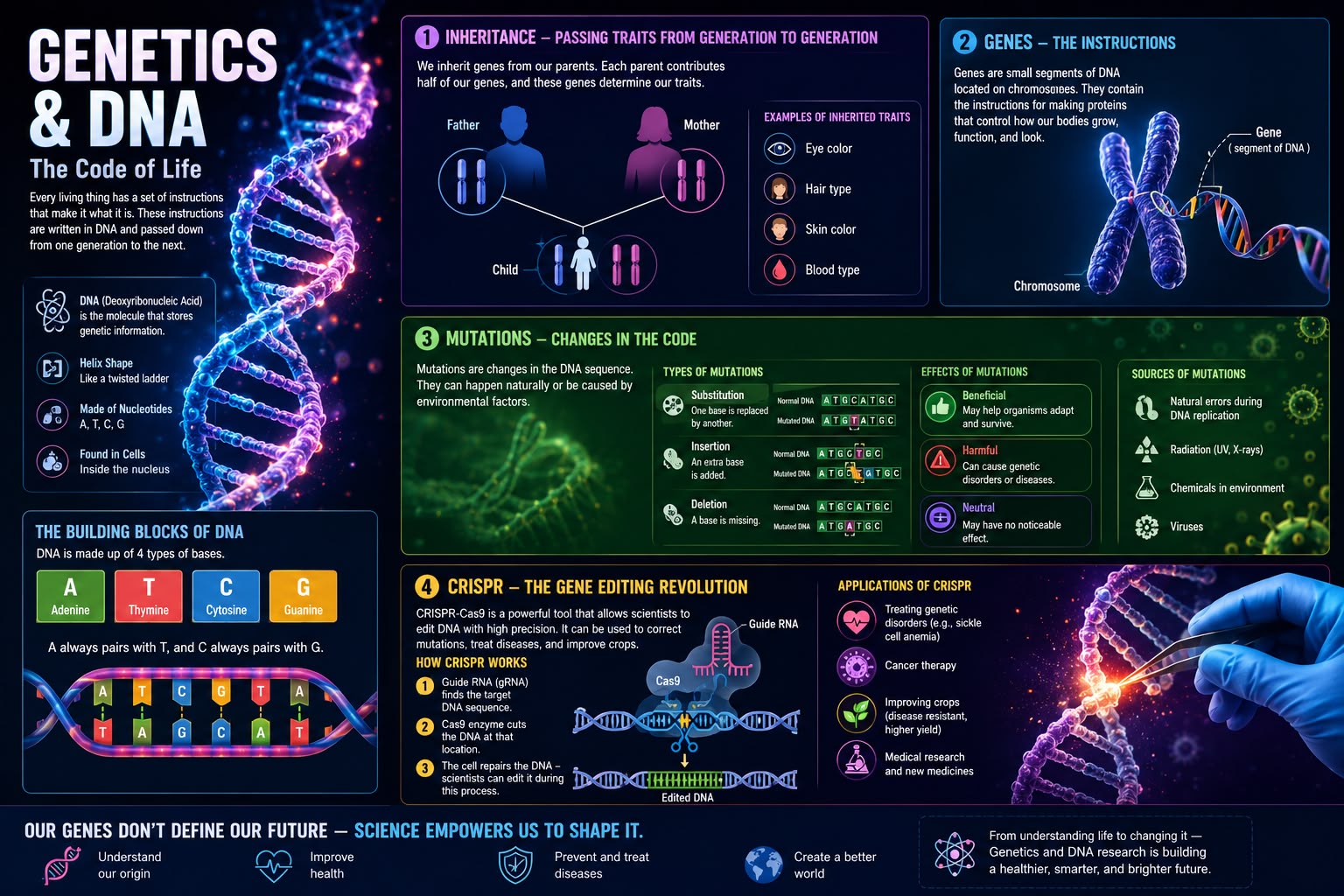
Genetics is the science of how traits pass from parents to offspring, and DNA is the molecule that stores the instructions for life. Every living cell uses DNA as its blueprint, and tiny differences in that blueprint help explain why siblings look alike in some ways and different in others.
What DNA Does
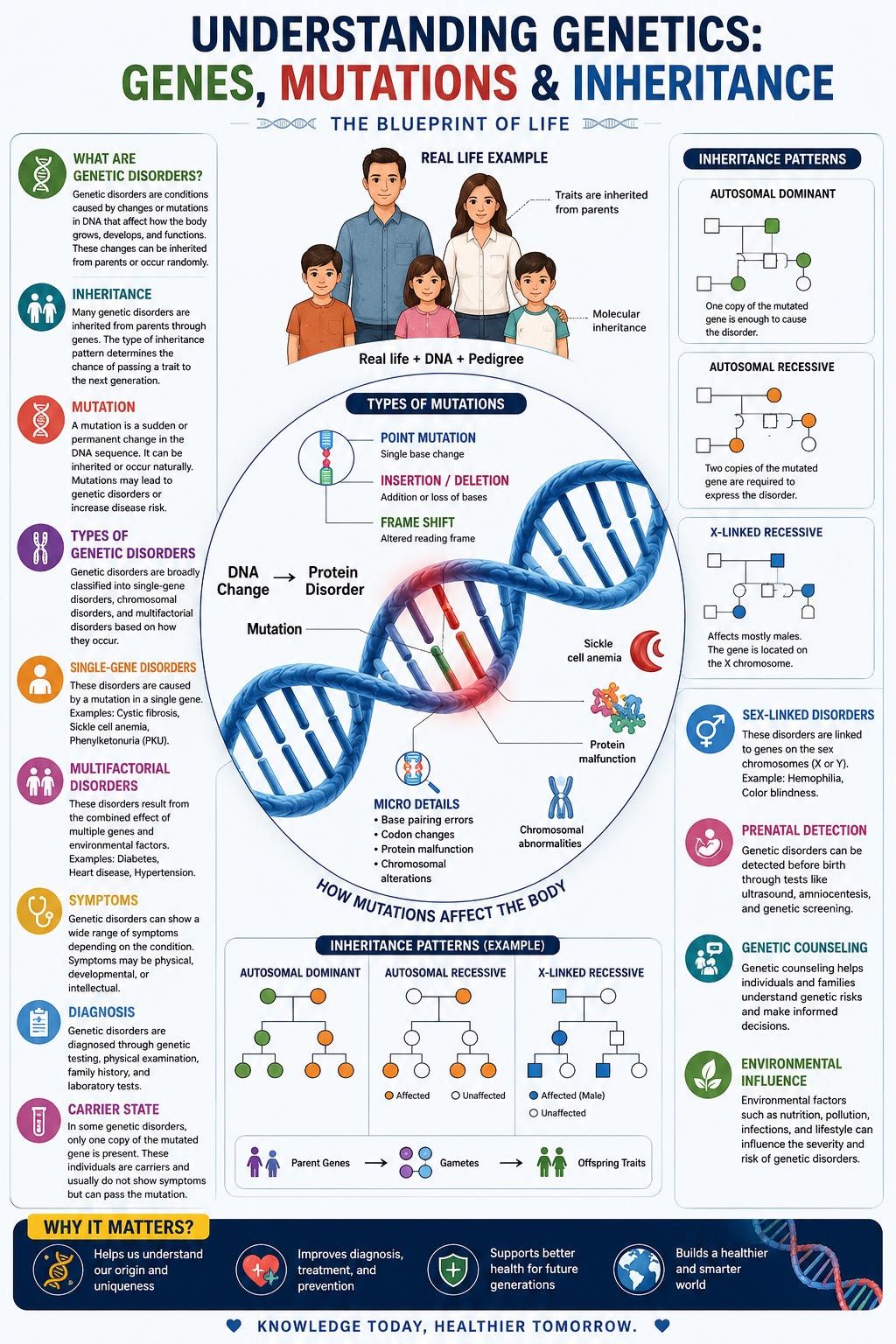
DNA, or deoxyribonucleic acid, carries the genetic instructions that guide how organisms grow, develop, and function. Genes are specific sections of DNA that usually provide the instructions for making proteins or functional RNA molecules. When cells read these instructions correctly, they produce the molecules needed for healthy life.
How Inheritance Works
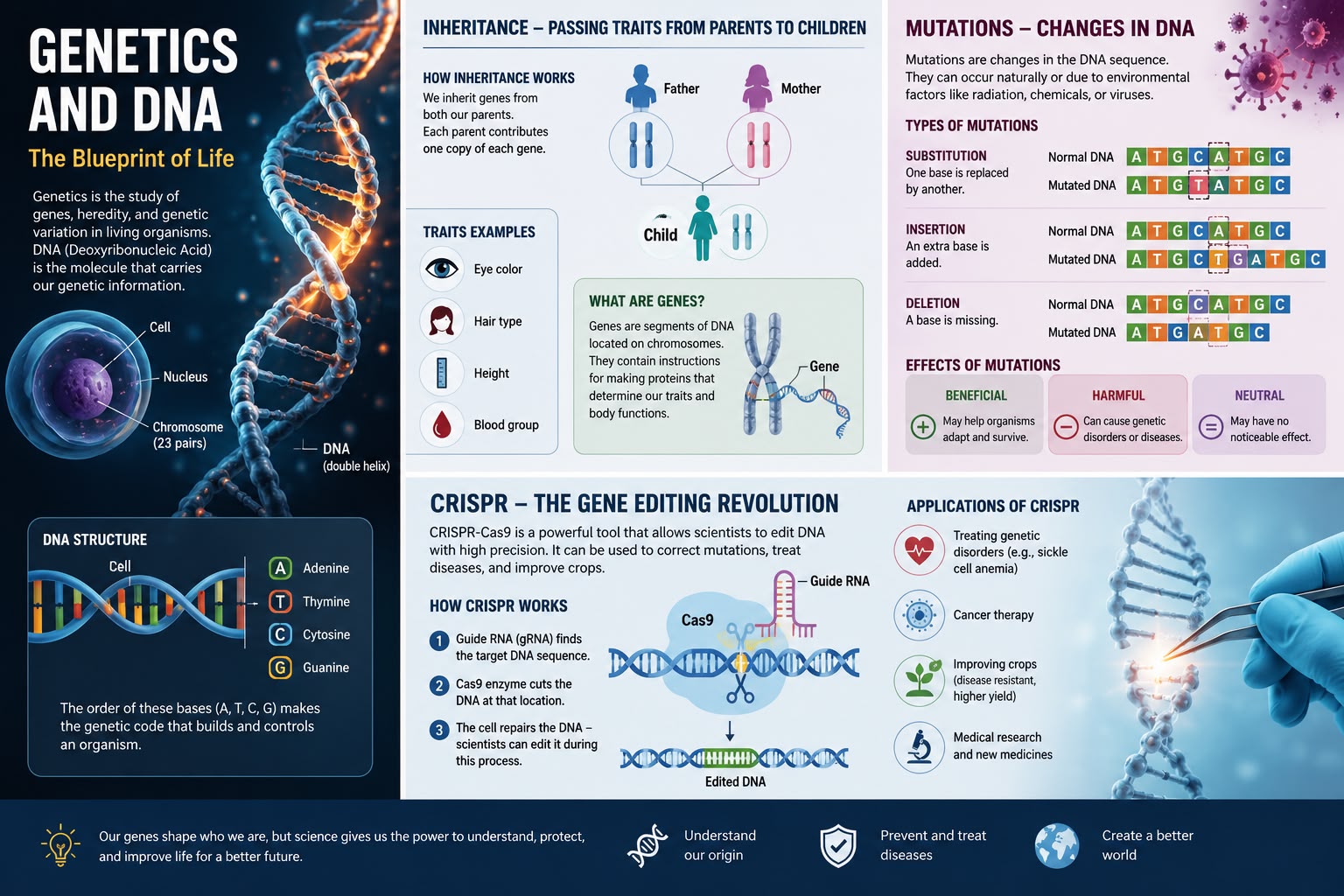
Inheritance is the process by which genetic information is passed from one generation to the next. In sexual reproduction, children receive DNA from both parents, which means they inherit a mixture of genetic traits. Some traits follow simple patterns, such as dominant and recessive inheritance, while many others are influenced by multiple genes and the environment together.
Genes and Variation
Genes are not fixed in the sense that everyone has the same versions. Different versions of a gene are called alleles, and these differences help create human diversity in features such as eye color, blood type, height, and even disease risk. Many important traits are polygenic, meaning they are controlled by several genes rather than just one.
Mutations: The Source of Change
Mutations are changes in DNA. They can be as small as a single letter change or as large as the loss, duplication, or rearrangement of bigger DNA sections. Some mutations have no noticeable effect, some can be harmful and cause disease, and others can be beneficial by giving organisms an advantage over time.
Mutations matter because they create genetic variation, and variation is the raw material for evolution. They also help scientists understand why certain diseases happen and how genetic disorders may be treated more effectively.
What CRISPR Is
CRISPR is a powerful gene-editing tool adapted from a natural bacterial defense system. In the lab, it usually works with two main parts: a guide RNA that finds the target DNA sequence and a Cas enzyme, often Cas9, that cuts the DNA at that location.
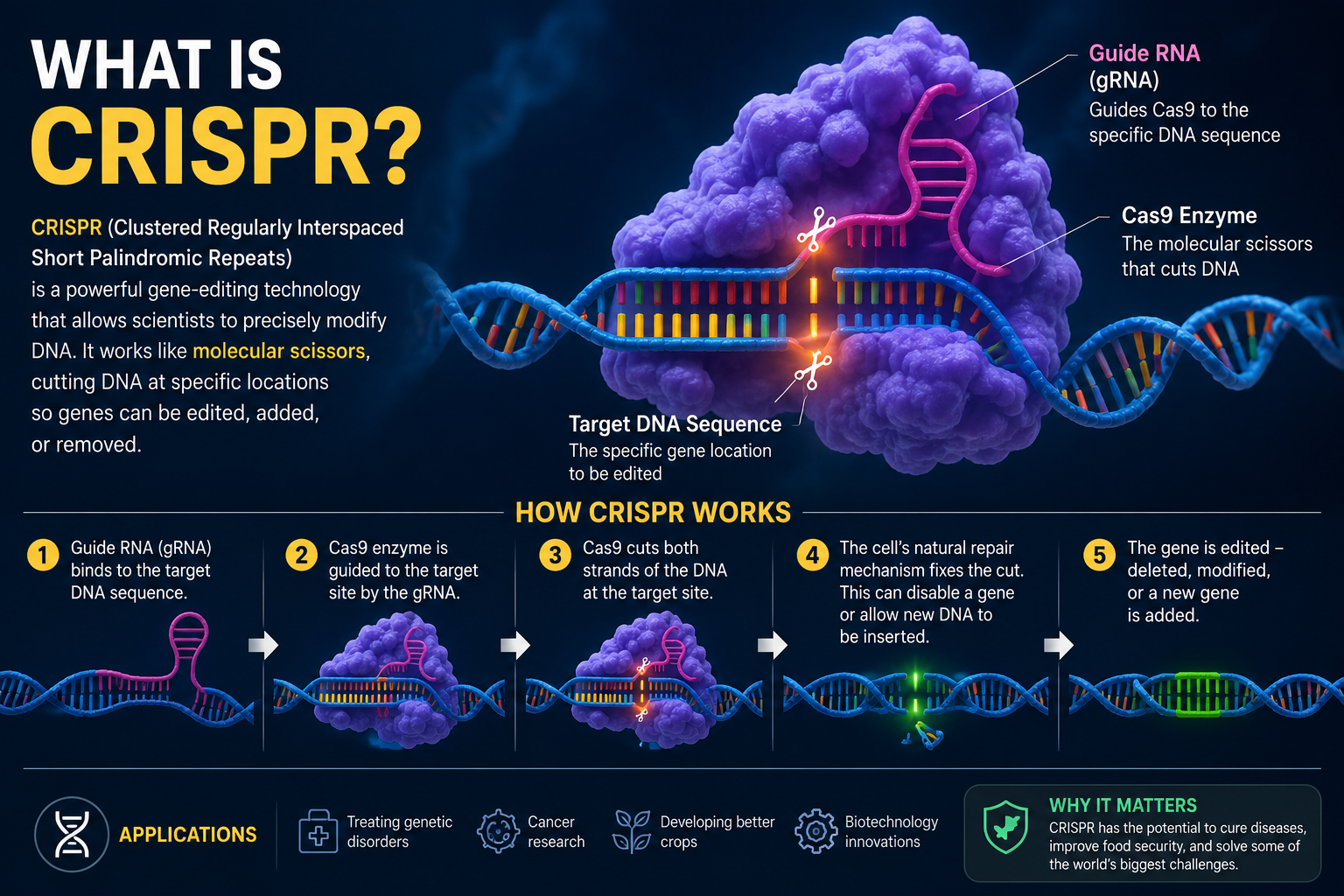
Once the DNA is cut, the cell repairs it. Scientists can use this repair process to disrupt a gene, correct a mutation, or make a precise change in the genome. That is why CRISPR has become one of the most important tools in modern genetics.
Why CRISPR Matters
CRISPR has changed the way researchers study biology because it makes gene editing faster, cheaper, and more precise than older methods. Scientists use it to create disease models, study how specific genes work, and explore potential treatments for genetic disorders.[broadinstitute +1]
In medicine, CRISPR is being explored for conditions caused by harmful DNA mutations, and in agriculture, it is being used to improve crop traits and productivity. Newer advances are also expanding CRISPR into gene regulation and epigenetic editing, where gene activity can be changed without altering the DNA sequence itself.
Challenges and Ethics
Even though CRISPR is promising, it is not perfect. Scientists still have to deal with off-target edits, delivery into the right cells, and the fact that not every cell may be edited the same way. These limitations mean that careful testing is essential before broad medical use.
There are also ethical questions, especially around editing embryos or changes that could be passed to future generations. Because genetics affects health, identity, and society, responsible use of gene-editing technology is just as important as the science itself.
Why This Field Matters
Genetics helps explain why life is diverse, why some diseases run in families, and how biology changes over time. DNA, genes, mutations, and CRISPR are all part of one connected story: how information is stored, inherited, changed, and sometimes rewritten.
As research moves forward, genetics will keep shaping medicine, biotechnology, and our understanding of life itself. CRISPR and newer gene-editing tools may one day help prevent or treat more inherited diseases with greater precision.
References
• National Institute of General Medical Sciences, “What Is CRISPR?”[nih]https://www.nigms.nih.gov/education/fact-sheets/Pages/CRISPR-Facts.aspx
• National Human Genome Research Institute (NHGRI) – Genetics & DNA https://www.genome.gov/genetics-glossary
• Broad Institute (MIT & Harvard) https://www.broadinstitute.org/what-broad/areas-focus/project-spotlight/questions-and-answers-about-crispr
• “Precision gene editing: The power of CRISPR-Cas in modern genetics.”[nih] http://Precision gene editing: The power of CRISPR-Cas in modern genetics
• “Recent advances in CRISPR-based functional genomics for the study of disease-associated genetic variants.”[nature]http://Recent advances in CRISPR-based functional genomics for the study of disease-associated genetic variants
• “This CRISPR breakthrough turns genes on without cutting.”[sciencedaily] https://www.sciencedaily.com/releases/2024/12/241212160154.htm