Microbiology: How Bacteria, Viruses, and Fungi Affect Human Health
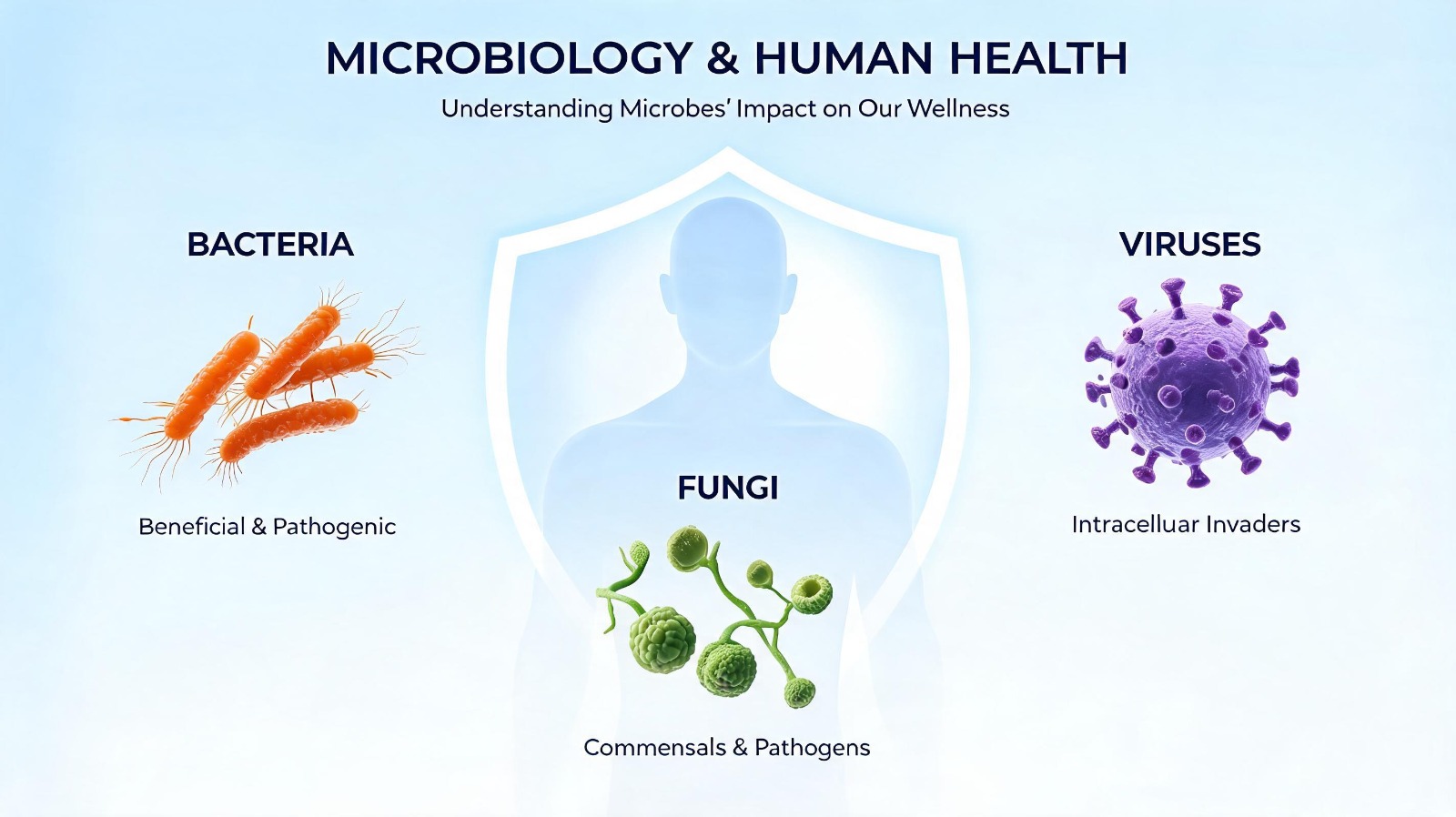
Microbiology is the study of microscopic organisms that influence life in powerful ways. Bacteria, viruses, and fungi can either support health or cause disease, and their impact is felt across every region of the world. These microbes shape how we digest food, fight infection, make medicines, and respond to outbreaks.
Bacteria: Helpful and Harmful
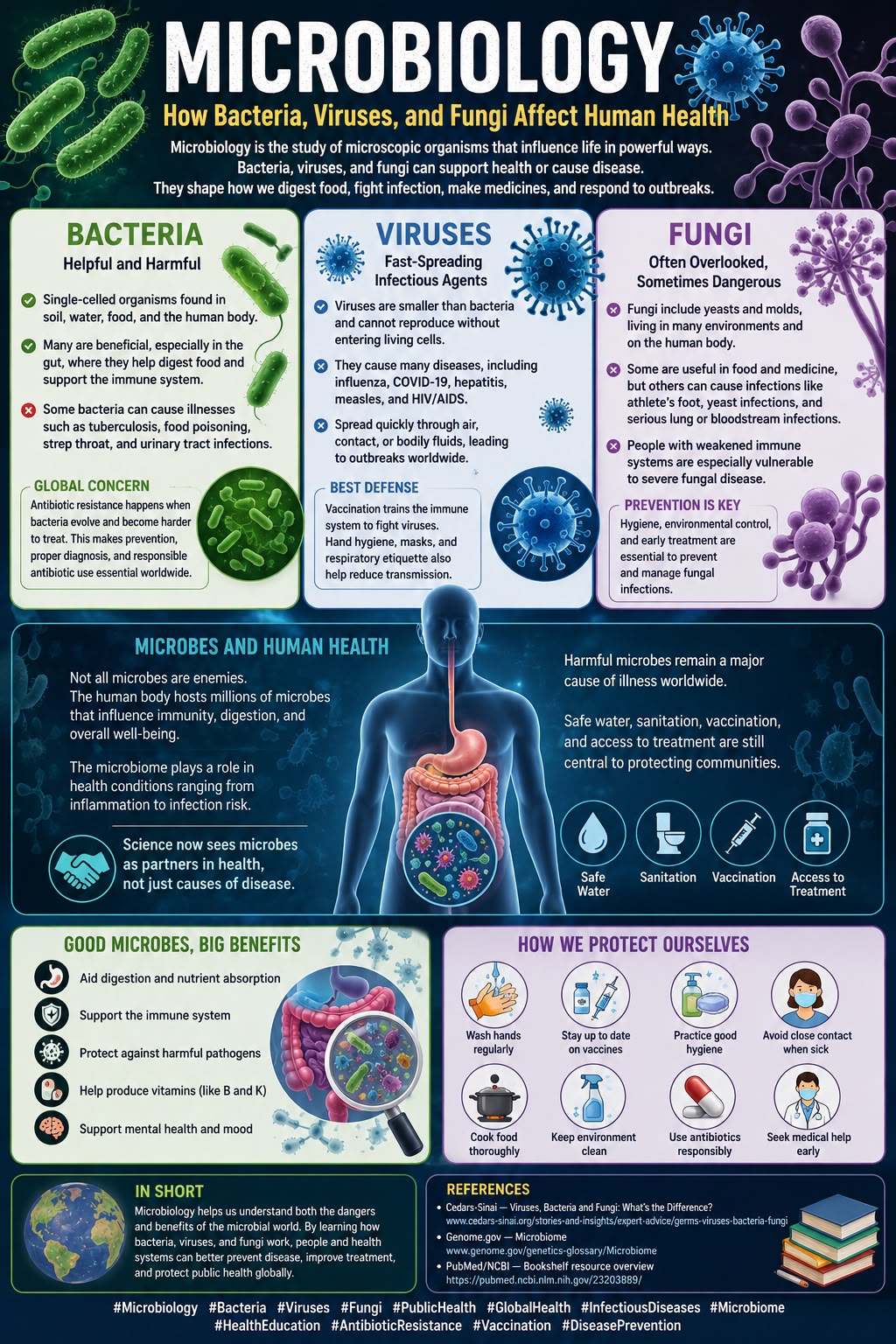
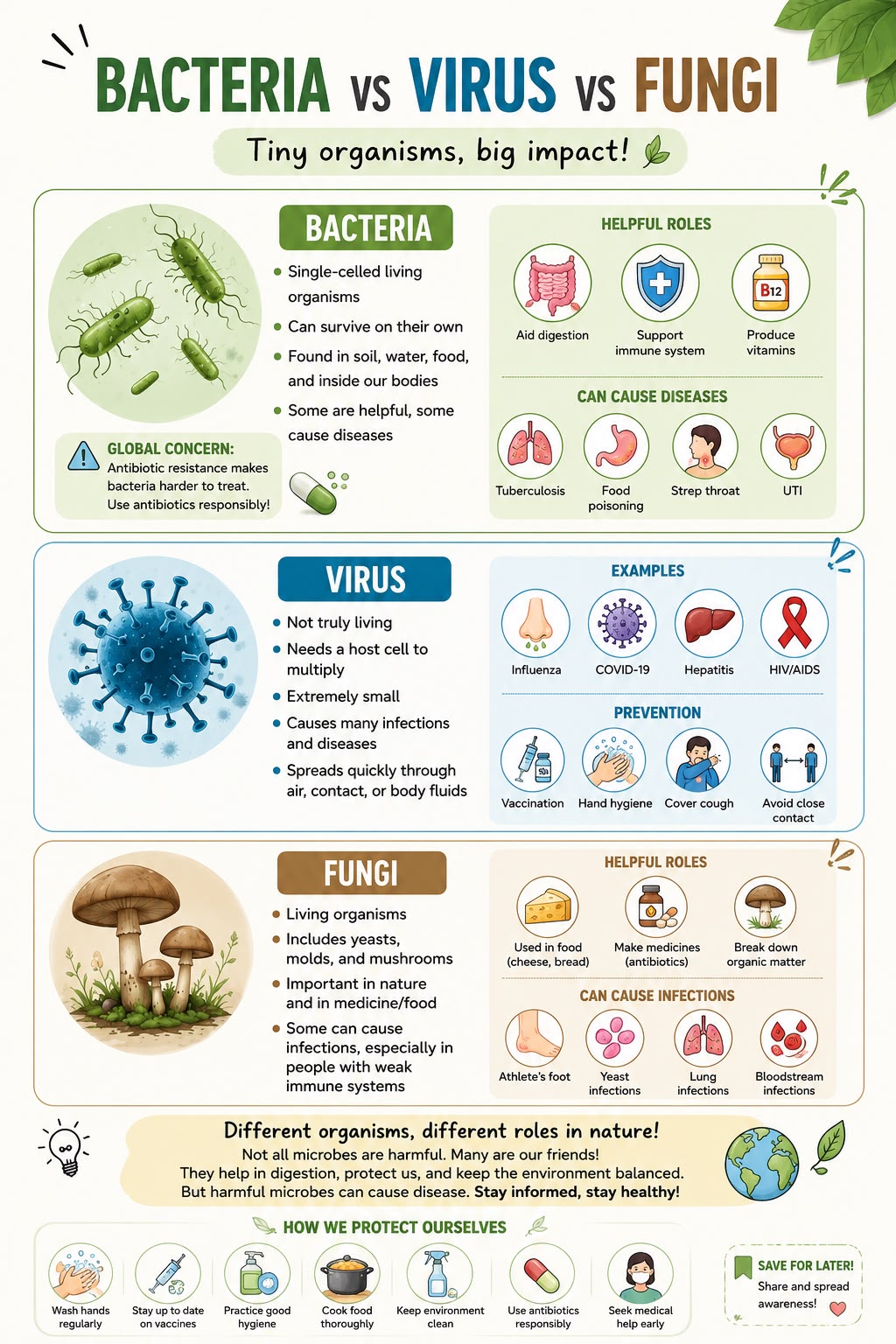
Bacteria are single-celled organisms found in soil, water, food, and the human body. Many are beneficial, especially those living in the gut, where they help digest food and support the immune system. Some bacteria, however, can cause illnesses such as tuberculosis, food poisoning, strep throat, and urinary tract infections.
A major global concern is antibiotic resistance, which happens when bacteria evolve and become harder to treat. This makes prevention, proper diagnosis, and responsible antibiotic use essential worldwide.
Viruses: Fast-Spreading Infectious Agents
Viruses are even smaller than bacteria and cannot reproduce without entering living cells. They are responsible for many common and serious diseases, including influenza, COVID-19, hepatitis, measles, and HIV/AIDS. Because viruses spread quickly through air, contact, or bodily fluids, they can trigger outbreaks that affect countries and continents alike.
Vaccination remains one of the most effective tools against viral disease because it trains the immune system to recognize and fight specific viruses. Public health measures such as hand hygiene and respiratory etiquette also reduce transmission.
Fungi: Often Overlooked, Sometimes Dangerous
Fungi include yeasts and molds, and they live in many environments as well as on the human body. Some fungi are useful in food and medicine, but others can cause infections such as athlete’s foot, yeast infections, and serious lung or bloodstream infections. People with weakened immune systems are especially vulnerable to severe fungal disease.
Fungal infections may be less talked about than bacterial or viral ones, but they are an important global health issue. Prevention depends on hygiene, environmental control, and early treatment when needed.
Microbes and Human Health
Not all microbes are enemies. The human body hosts millions of microbes that influence immunity, digestion, and overall well-being. Scientists now recognize that the microbiome plays a role in health conditions ranging from inflammation to infection risk. This has changed how medicine thinks about microbes: they are not only causes of disease, but also partners in health.
At the same time, harmful microbes remain a major cause of illness worldwide. Safe water, sanitation, vaccination, and access to treatment are still central to protecting communities.
Blog-Friendly Ending
Microbiology helps us understand both the dangers and benefits of the microbial world. By learning how bacteria, viruses, and fungi work, people and health systems can better prevent disease, improve treatment, and protect public health globally.
References
Cedars-Sinai — Viruses, Bacteria and Fungi: What’s the Difference?
https://www.cedars-sinai.org/stories-and-insights/expert-advice/germs-viruses-bacteria-fungi
Genome.gov — Microbiome
https://www.genome.gov/genetics-glossary/Microbiome
PubMed/NCBI — Bookshelf resource overview
https://pubmed.ncbi.nlm.nih.gov/23203889/