
Ecology and Environment: Why Nature’s Balance Matters
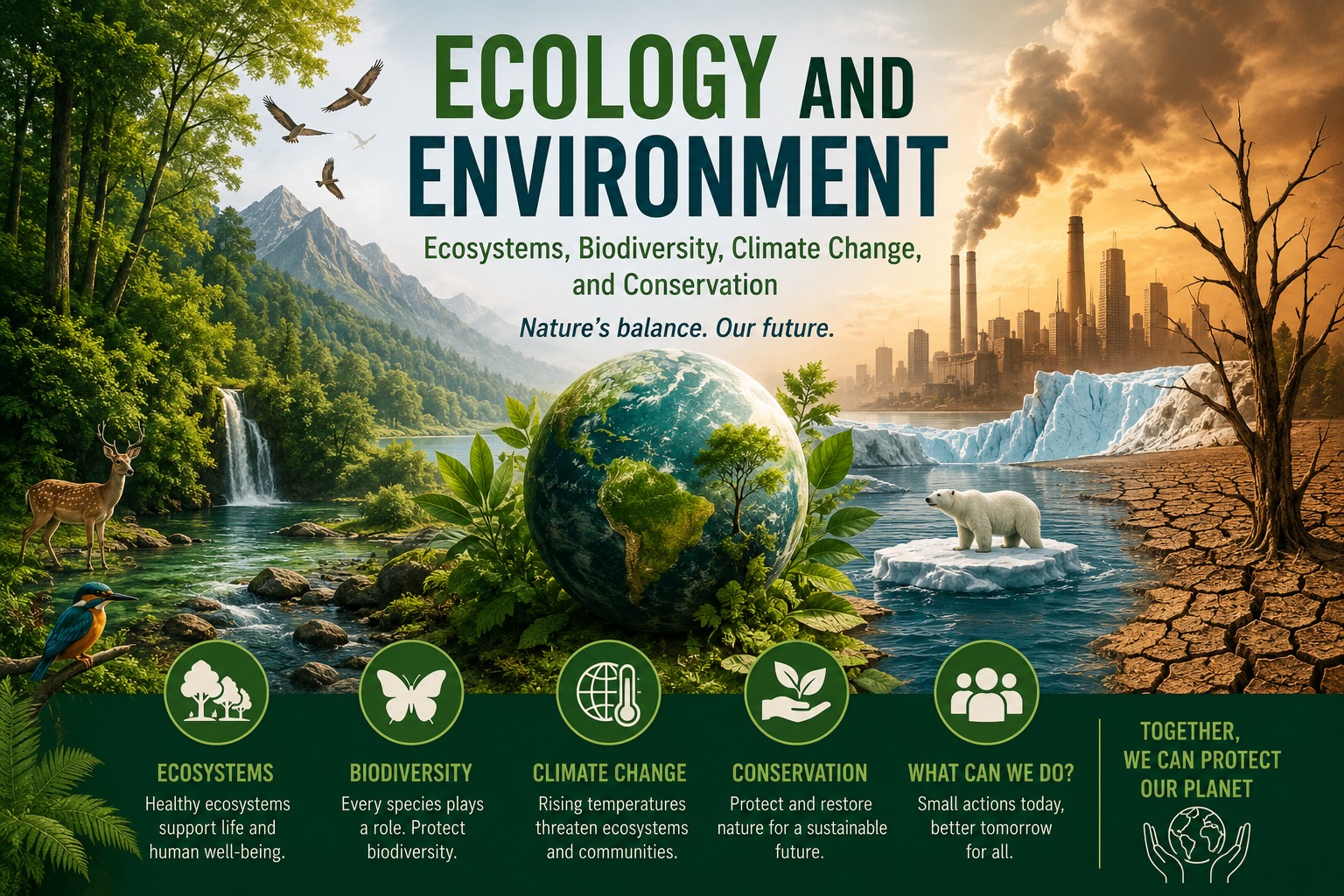
Ecology is the study of how living things interact with one another and with their environment. It helps us understand how ecosystems function, why biodiversity is essential, and how human activity and climate change can disrupt natural balance.
What are ecosystems?
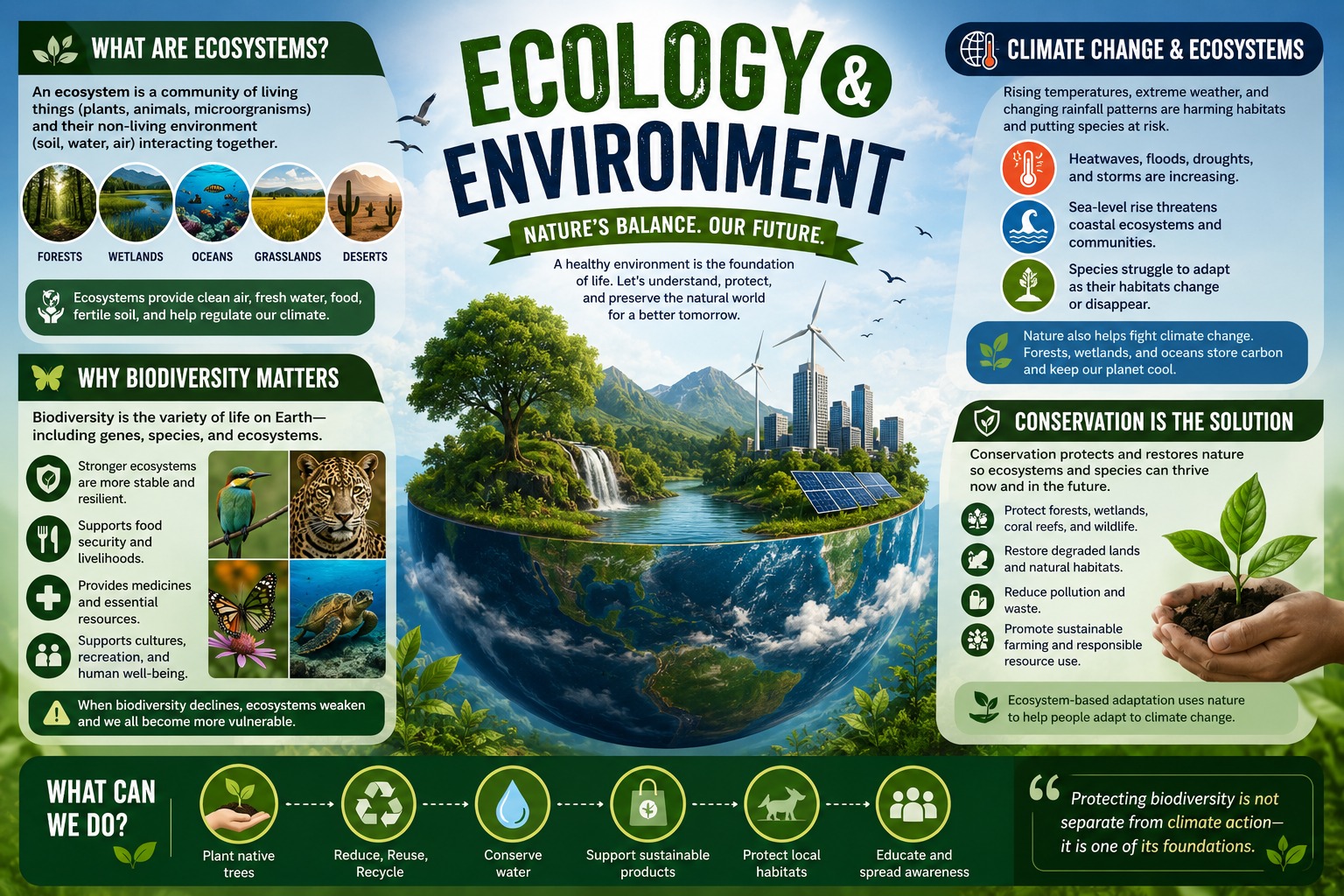
An ecosystem is a community of plants, animals, microorganisms, soil, water, and air interacting together in a specific place. Forests, wetlands, oceans, grasslands, and deserts are all ecosystems, and each one provides vital services such as clean water, fertile soil, food, and climate regulation.
Healthy ecosystems are not just “nice to have”; they support life and help reduce the impacts of floods, droughts, and heat stress. Restoring degraded ecosystems is also a practical way to improve resilience and support human well-being.
Why biodiversity matters
Biodiversity means the variety of life on Earth, including genes, species, and ecosystems. High biodiversity generally makes ecosystems more stable, productive, and better able to recover from disturbances like storms, pests, and droughts.
When biodiversity declines, ecosystems become weaker and less adaptable. The loss of species can reduce food security, damage livelihoods, and make communities more vulnerable to climate-related risks.
Climate change and ecosystems
Climate change is one of the biggest threats to ecosystems today. Rising temperatures, shifting rainfall patterns, sea-level rise, and extreme weather events are changing habitats and putting pressure on species that cannot adapt quickly enough.
The relationship works both ways: ecosystems also help slow climate change. Forests, wetlands, and oceans store carbon, while healthy natural systems absorb greenhouse gases and help regulate temperatures.
Conservation as a solution
Conservation is the protection and careful management of nature so that ecosystems and species survive for future generations. This includes protecting forests, restoring wetlands, reducing pollution, managing land sustainably, and promoting biodiversity-friendly agriculture.
One of the most effective approaches is ecosystem-based adaptation, which uses natural systems to help people adapt to climate change. For example, mangroves can reduce coastal flooding, forests can stabilize slopes, and diverse agroforestry can support farms under changing weather conditions.
What can we do?
Individuals, schools, communities, and governments can all contribute to conservation. Simple actions include planting native trees, reducing waste, conserving water, supporting sustainable products, and protecting local habitats.
Long-term change also requires policy action, stronger environmental laws, and climate solutions that put nature at the center. Protecting biodiversity is not separate from climate action; it is one of its foundations.
References
United Nations Climate Change. “Biodiversity – our strongest natural defense against climate impacts.”
https://www.un.org/en/climatechange/science/climate-issues/biodiversity
Convention on Biological Diversity. “Climate Change and Biodiversity – Introduction.”
https://www.cbd.int/climate/intro.shtml
World Health Organization. “Biodiversity.”
https://www.who.int/news-room/fact-sheets/detail/biodiversity
U.S. Climate Resilience Toolkit. “Ecosystems and Biodiversity.”
http://toolkit.climate.gov/ecosystems-and-biodiversity
United Nations Framework Convention on Climate Change. “Linkages Between Biodiversity and Climate Change and the Role of Biodiversity in Climate Change Mitigation and Adaptation.” https://unfccc.int/sites/default/files/resource/Thematic_Paper_2_Linkages_Between_Biodiversity_and_Climate_Change_and_the_Role_o…