
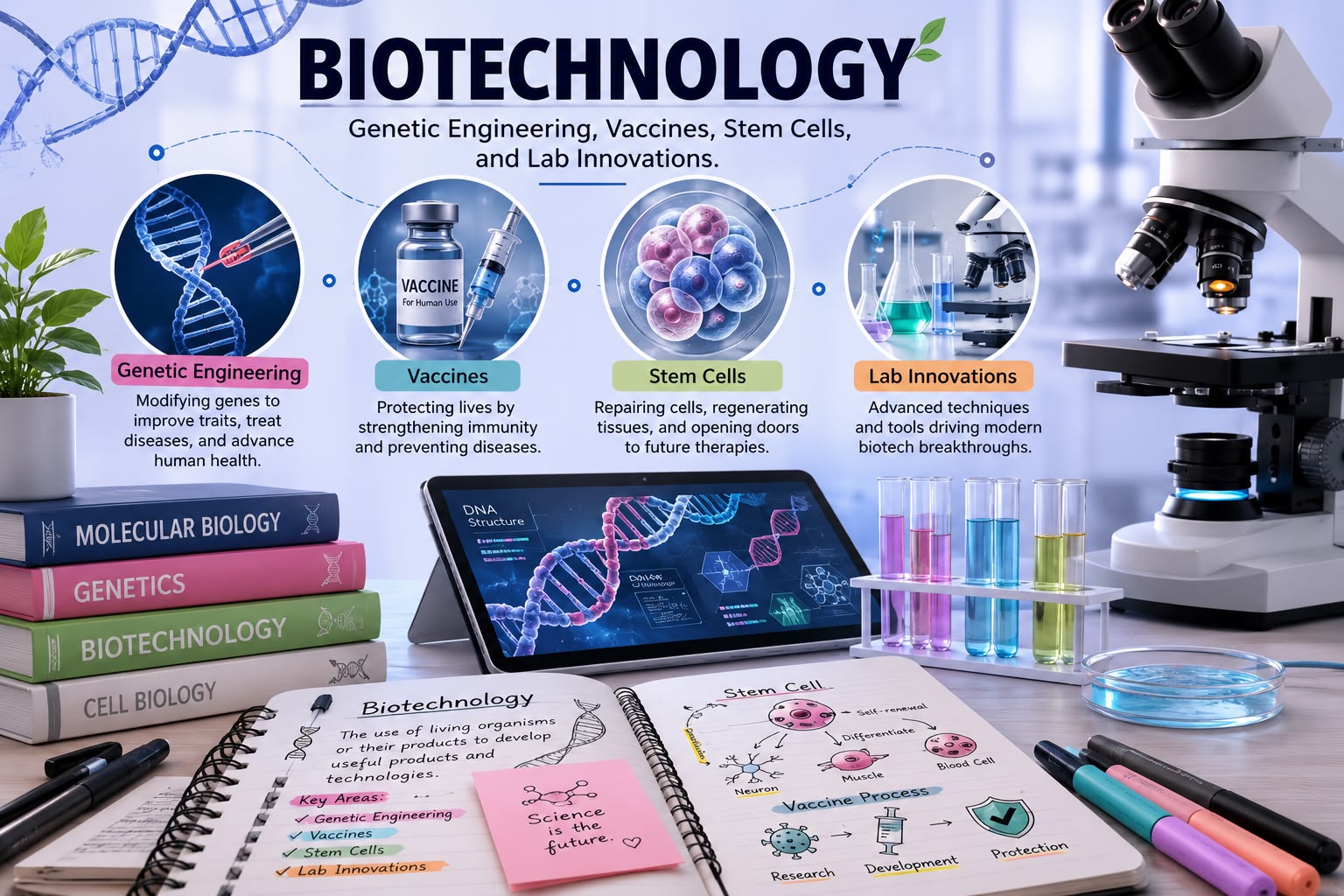
Biotechnology is transforming medicine, agriculture, and labs through precise genetic engineering, next‑generation vaccines, stem‑cell therapies, and rapid lab innovations that speed discovery and improve safety.[pivotalscientific +1]
What genetic engineering is and why it matters
• Genetic engineering changes DNA to add, remove, or correct traits in cells or organisms. This ranges from CRISPR-based edits to newer base and prime editors that alter single nucleotides with fewer breaks to the genome.[atlantisbioscience +1]
• Clinical translation accelerated after early approvals (for example CRISPR therapies for blood disorders) and today includes in‑vivo editing and delivery advances using lipid nanoparticles and viral vectors, enabling single‑dose, tissue‑targeted treatments.[atlantisbioscience +1]
Vaccines: from platforms to personalization
• mRNA and viral‑vector platforms proved their value during the COVID‑19 era and now enable faster vaccine design, including personalized cancer vaccines that use a patient’s tumor neoantigens to train the immune system.[zageno +1]
• New approaches include genetically engineered cellular vaccines and universal vaccine‑cell concepts built from stem cells that aim to mimic natural infection and induce broad immunity in preclinical and early clinical studies.[nih +1]
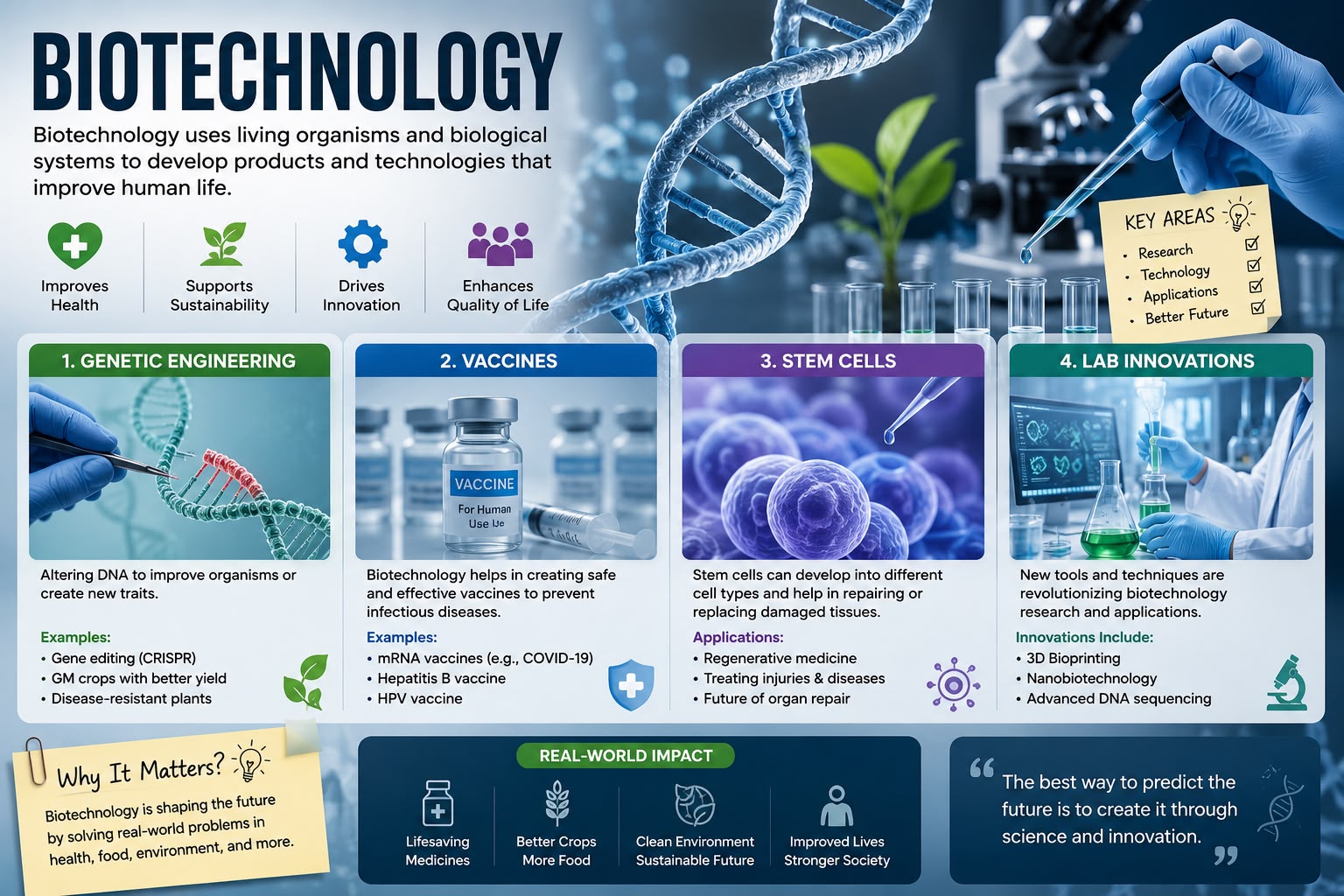
Stem cells and regenerative medicine
• Stem‑cell science supports tissue regeneration, disease modeling, and engineered cellular therapies; engineered stem cells are also being explored as vaccine platforms and as sources for replacement tissues.[nih +1]
• Regenerative medicine now combines gene editing and stem cells to correct inherited defects before or after transplantation, and trials are progressing in areas such as retinal disease, muscular disorders, and hematologic conditions.[pivotalscientific +1]
Laboratory innovations accelerating research
• Labs are adopting automation, spatial biology, multiplexed omics, and AI‑driven discovery pipelines that shorten timelines from idea to clinic and improve reproducibility.[cas +1]
• Emerging lab trends for 2026 emphasize human‑relevant testing models, agentic AI in regulated workflows, and scalable platforms for cell engineering, all of which reshape routine lab operations and regulatory expectations.[cas +1]
Opportunities and risks to watch
• Opportunities: potential cures for genetic diseases, personalized immunotherapies, scalable cell manufacturing, and faster outbreak responses with plug‑and‑play vaccine platforms.[zageno +1]
• Risks: delivery safety and off‑target edits in gene editing, immune and manufacturing challenges for complex cell therapies, and ethical and regulatory issues around germline modification and equitable access.[pivotalscientific +1]
Short case example (illustration)
• Example: An in‑vivo base‑editing therapy delivered by lipid nanoparticles targets liver cells to permanently reduce harmful cholesterol, offering a potential one‑time alternative to lifelong medications — an approach being actively advanced in 2026 research programs.[atlantisbioscience +1]
References
-
MIT Technology Review: Three technologies that will shape biotech in 2026
-
FDA: Safety Assessment of Genome Editing in Human Gene Therapy Products Using Next-Generation Sequencing
-
CAS: Scientific breakthroughs: 2026 emerging trends to watch
-
ZAGENO: What’s New in Biotech in 2026? Breakthroughs and Research Trends