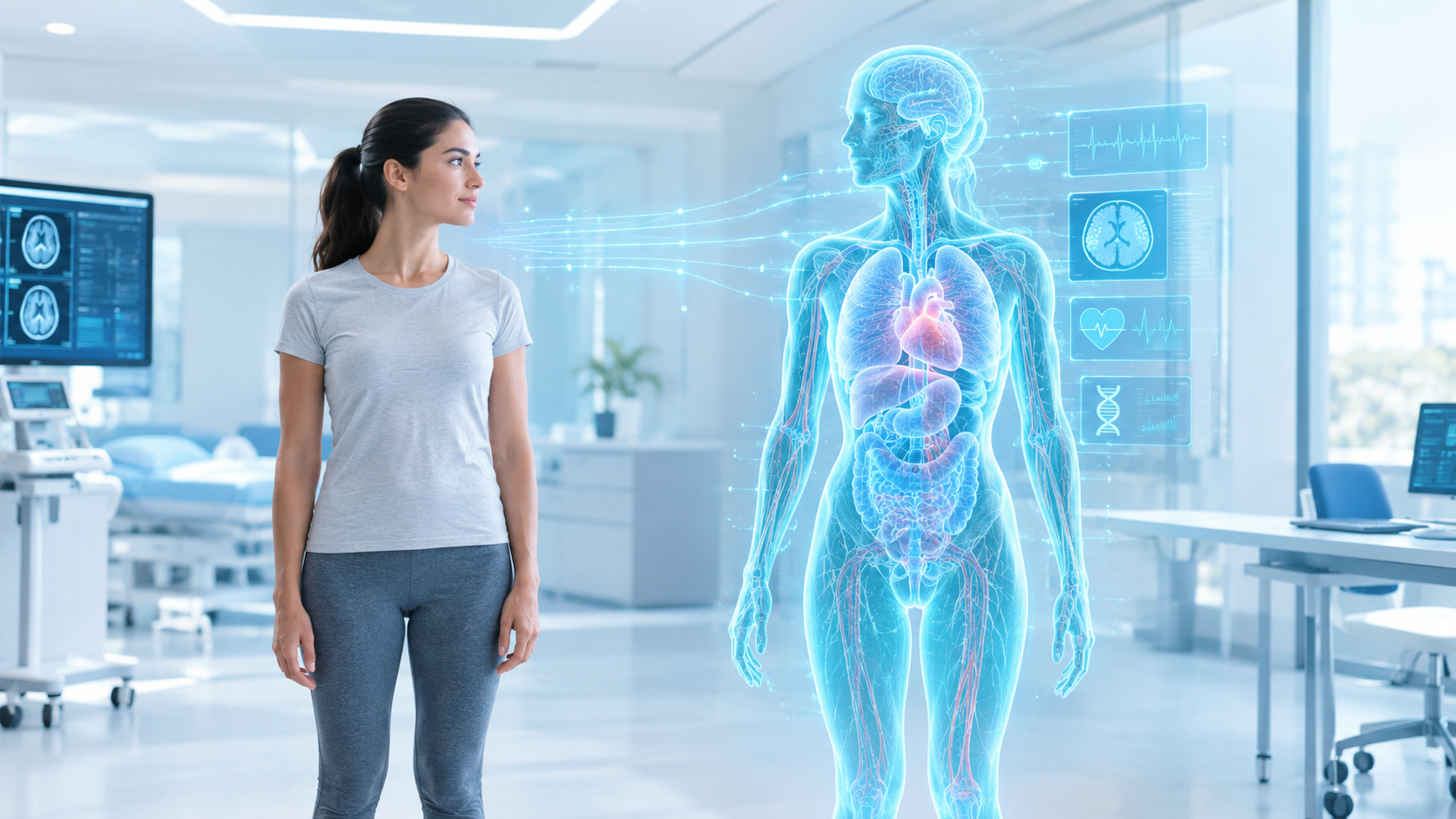
Imagine a virtual version of yourself that exists inside a computer.
It knows information about your heart, blood pressure, blood glucose, medical history, imaging results, physical activity, and other measurable characteristics. As new health information becomes available, the virtual model can be updated. Researchers can then use computational models and artificial intelligence (AI) to explore how your body might respond to different conditions or treatments.
This idea is known as a human digital twin.
But can AI really build a digital twin of you?
The answer is potentially—but not in the science-fiction sense of creating a perfect virtual human. Researchers are developing increasingly sophisticated patient-specific models that combine medical data, physiological simulations, machine learning, and real-time measurements. However, today’s systems are still limited, and many do not yet meet the strict definition of a true digital twin.
Recent reviews show that healthcare digital twins are being investigated for areas including disease prediction, treatment optimization, physiological monitoring, surgical planning, oncology, cardiovascular medicine, diabetes, rehabilitation, and clinical research.
What Is a Digital Twin?
A digital twin is more than a computer model or a medical database.
The National Academies describes a digital twin as a virtual representation that mimics a physical system, is dynamically updated with information from that physical system, has predictive capabilities, and can inform decisions. Importantly, the relationship between the real system and its virtual counterpart is bidirectional.
In healthcare, the physical system could be:
- A patient
- A heart
- A brain
- A tumor
- A blood vessel
- An organ
- A medical device
The virtual counterpart can then use mathematical models, physiological information, sensor data, imaging, and AI to represent and simulate aspects of that system.
A simplified concept looks like this:
Real Patient → Health Data → Digital Model → AI/Simulation → Prediction → Clinical Decision → Updated Patient Data
The cycle can continue as new information becomes available.
What Is a Human Digital Twin?
A human digital twin is a patient-specific virtual representation designed to reflect relevant aspects of an individual person’s biology and health.
It could potentially combine multiple types of information, including:
- Electronic health records
- Medical imaging
- Laboratory measurements
- Genetic information
- Physiological measurements
- Wearable-device data
- Medication history
- Lifestyle information
- Disease-specific measurements
The goal is not necessarily to reproduce every molecule or cell in a person’s body.
Instead, the digital twin is designed around a specific healthcare purpose.
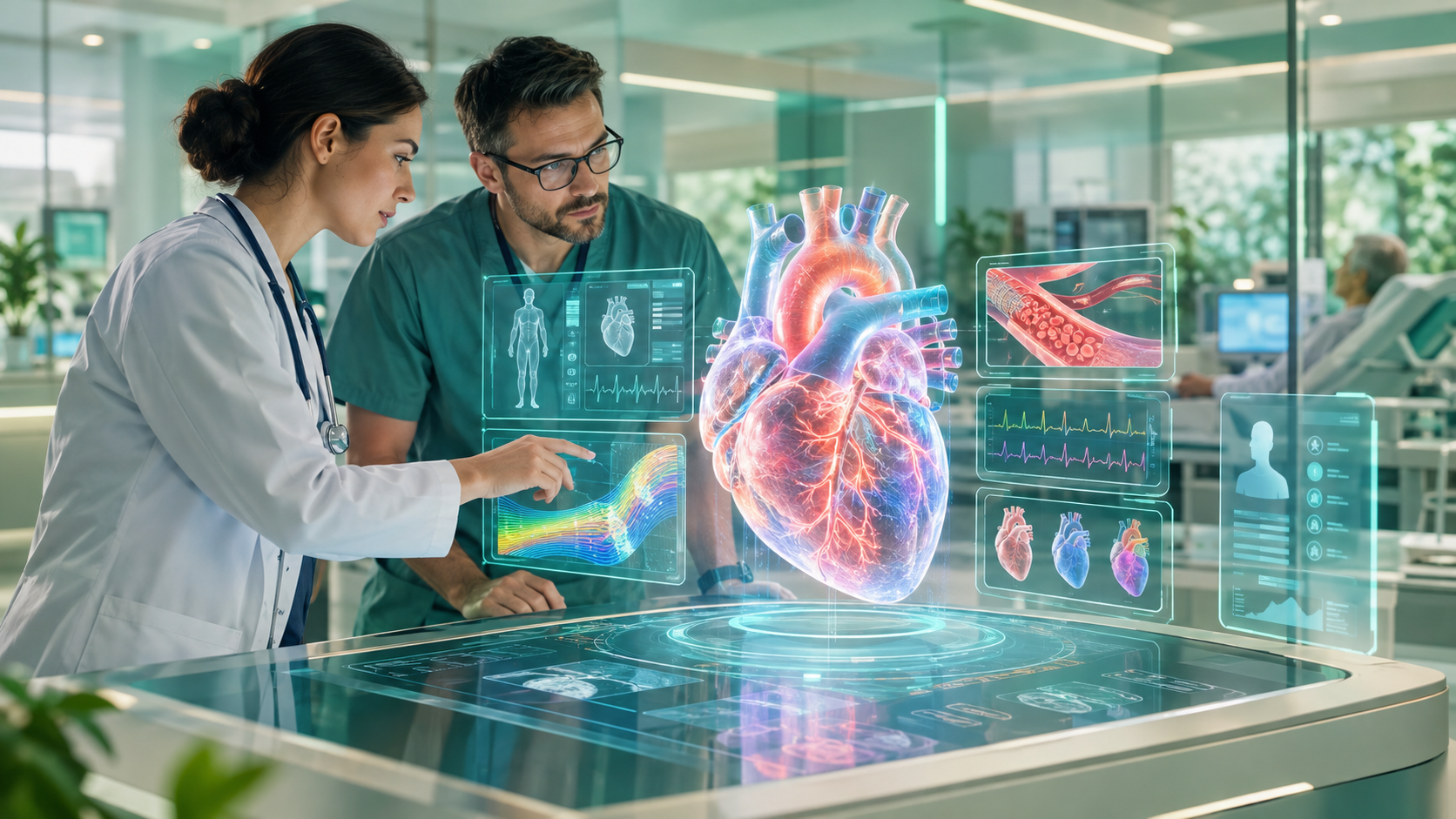
For example, a cardiovascular digital twin may focus heavily on the patient’s heart structure, blood flow, electrical activity, and cardiovascular measurements rather than attempting to model the entire human body.
This distinction is important because a useful digital twin does not need to simulate everything. It needs to represent the aspects of the biological system that matter for the question being studied.
How Can AI Build a Digital Twin?
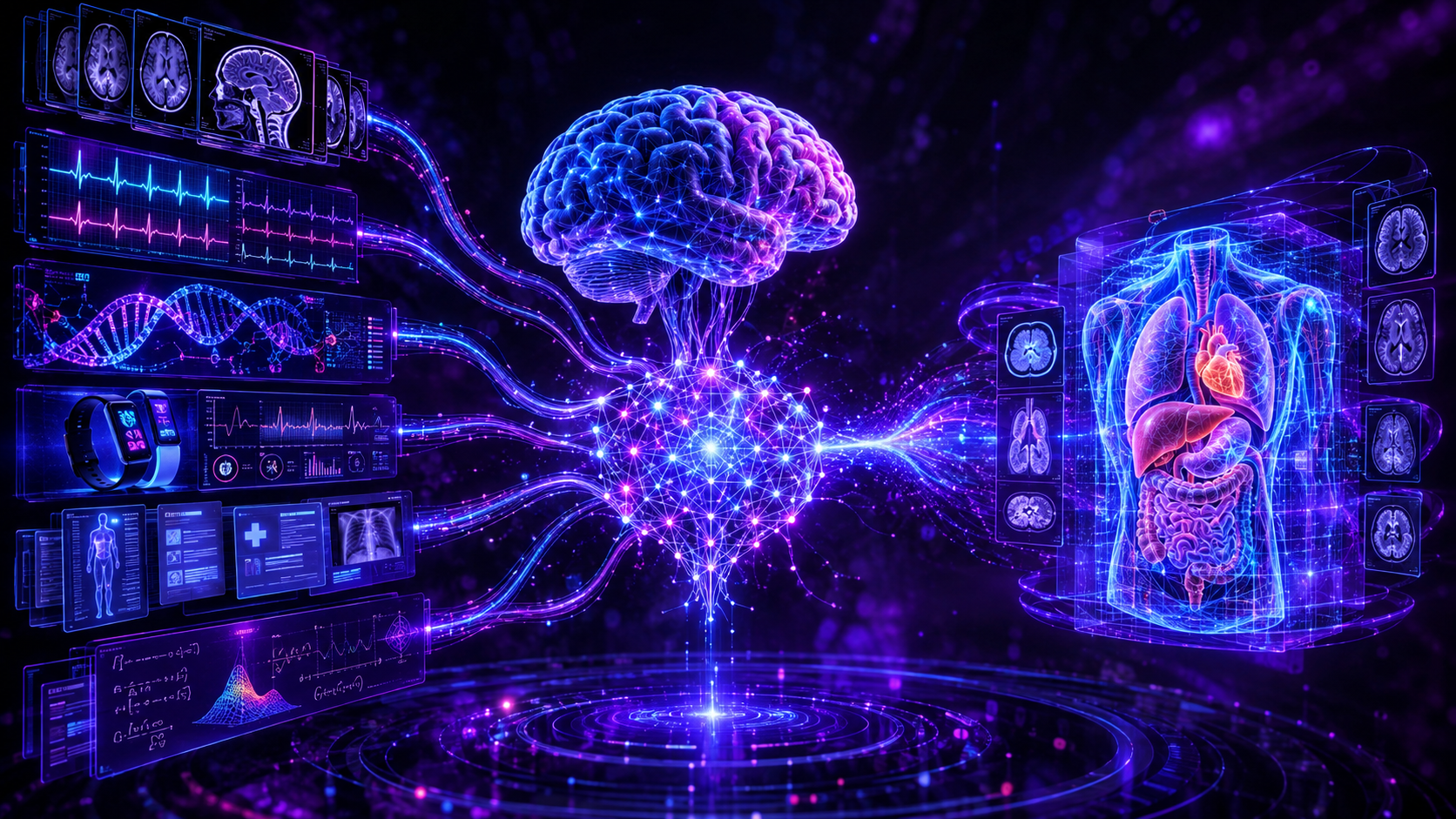
AI is one component of the technology stack behind human digital twins.
A healthcare digital twin generally requires several interconnected technologies.
1. Collecting Patient Data
The first step is obtaining reliable information about the patient.
Data may come from:
- MRI scans
- CT scans
- Ultrasound
- ECG measurements
- Blood tests
- Glucose monitors
- Wearable sensors
- Electronic health records
- Genomic data
- Medical devices
For example, an ECG can provide information about electrical activity in the heart, while medical imaging can provide structural information.
Different data sources can then be combined to construct a more individualized model.
2. Creating a Patient-Specific Model
Raw data alone does not create a digital twin.
Engineers and researchers need computational models that represent biological processes.
These models may use:
- Differential equations
- Biomechanical models
- Physiological models
- Statistical models
- Machine learning
- Deep learning
- Computational fluid dynamics
- Agent-based models
- Finite-element models
Biomedical engineering plays an important role here because human physiology is a complex physical system.
For example, researchers can model blood flow through vessels using mathematical and computational methods.
A digital model can then be calibrated using information from an individual patient.
3. Using Artificial Intelligence
AI can help identify patterns in large and complex datasets.
Machine-learning models may be used for tasks such as:
Prediction
Estimating future physiological states or disease-related outcomes.
Classification
Identifying patterns associated with different conditions.
Data integration
Combining information from different sources.
Parameter estimation
Estimating patient-specific parameters for computational models.
Image analysis
Extracting useful information from medical images.
Optimization
Searching for treatment or intervention strategies under defined constraints.
Recent research specifically highlights the combination of AI with mechanistic modeling as a promising direction because AI and physics/physiology-based models can compensate for some limitations of using either approach alone.
The Difference Between AI, Simulation and a Digital Twin
These terms are often used interchangeably, but they are not the same.
Artificial Intelligence
AI learns patterns from data and can make predictions or classifications.
Computer Simulation
A simulation uses a computational model to reproduce or explore the behavior of a system.
Digital Model
A digital model represents a real-world object or process but does not necessarily maintain a continuous connection with it.
Digital Shadow
A digital shadow can receive information from the physical system, but the relationship may primarily flow in one direction.
Digital Twin
A digital twin is intended to maintain a dynamic connection between the physical and virtual systems and support prediction or decision-making.
Researchers have pointed out that many systems currently described as “human digital twins” do not satisfy all elements of a strict digital-twin definition. A 2025 scoping review found that only 18 of 149 included studies fully met the National Academies-based criteria used by the authors.
So, calling every AI medical model a digital twin would be misleading.
What Could Your Digital Twin Actually Do?
The potential applications are extensive.
Personalized Treatment
One of the most exciting possibilities is treatment personalization.
Instead of asking:
“What treatment works for most patients?”
researchers could eventually ask:
“How might this particular patient’s system respond to different treatment strategies?”
A digital model could simulate possible scenarios before a clinical decision is made.
This concept is particularly relevant to diseases where patients can respond very differently to the same treatment.
Digital Twins in Cancer Treatment
Cancer is one area receiving significant attention.
A cancer-related digital twin could potentially combine:
- Medical imaging
- Tumor characteristics
- Laboratory measurements
- Treatment history
- Molecular information
- Patient-specific physiological data
Researchers could then simulate aspects of tumor behavior or treatment response.
The National Academies has specifically illustrated a cancer-patient digital-twin concept in which imaging and laboratory results update a virtual representation that can be used to simulate potential treatment responses.
Research into digital twins for oncology is also expanding. For example, a 2025 systematic review examined AI-based digital-twin approaches for prostate cancer and highlighted the importance of integrating genomic, radiological, and clinical information while improving real-time adaptability and clinical validation.
Digital Twins for Heart Disease
The cardiovascular system is another major research area.
A cardiovascular digital twin could potentially represent aspects of:
- Heart anatomy
- Electrical activity
- Blood flow
- Vessel structure
- Cardiac function
Researchers can then use computational models to investigate how changes in the cardiovascular system might affect an individual patient.
A 2026 review in Nature Reviews Bioengineering examined digital models and digital twins of the human circulatory system and their potential applications in understanding, monitoring, and treating cardiovascular and blood-related diseases.
Digital Twins for Diabetes
Diabetes is another area where continuous data could be particularly useful.
A future patient-specific model could potentially incorporate information such as:
- Blood glucose measurements
- Insulin information
- Food intake
- Physical activity
- Physiological characteristics
- Medication information
The model could then simulate how glucose levels might change under different conditions.
Recent healthcare digital-twin reviews have reported research involving glucose management and personalized metabolic modeling, although real-world clinical implementation remains limited.
Digital Twins and Brain Health
The brain is one of the most challenging organs to model.
Its enormous complexity makes a complete human brain digital twin extremely difficult.
However, researchers can develop narrower models focusing on specific questions.
Potential applications include:
- Neurological disease modeling
- Brain tumor treatment planning
- Neurostimulation
- Rehabilitation
- Brain imaging analysis
- Disease progression prediction
The objective is not necessarily to reproduce every neuron in a person’s brain.
Instead, researchers can build models appropriate to a specific scientific or clinical problem.
Could a Digital Twin Predict Your Future Health?
This is where AI becomes particularly interesting.
If a digital twin continuously receives relevant information, it could potentially be used to explore possible future scenarios.
For example:
Current patient data
↓
Patient-specific computational model
↓
AI + physiological simulation
↓
Possible future states
↓
Clinical decision support
This does not mean the system can know exactly what will happen to a person.
Biological systems are highly complex, and predictions always contain uncertainty.
Instead, digital twins may provide probabilistic or scenario-based information that can help researchers and clinicians understand possible outcomes.
Why Digital Twins Matter in Biomedical Engineering
Digital twins bring together several major areas of biomedical engineering.
Biomedical Sensors
Sensors can continuously measure physiological signals.
Medical Imaging
Imaging provides structural and functional information.
Computational Biology
Mathematical models can represent biological processes.
Artificial Intelligence
AI can identify patterns and generate predictions.
Systems Biology
Multiple biological processes can be studied as interconnected systems.
Medical Devices
Digital twins can also represent and monitor medical devices themselves.
This makes digital-twin technology a highly interdisciplinary field involving biomedical engineers, clinicians, computer scientists, data scientists, physicists, mathematicians, and other researchers.
What Are the Benefits of an AI Digital Twin?
If these technologies mature sufficiently, human digital twins could offer several potential benefits.
1. More Personalized Healthcare
Treatment decisions could potentially be based on individual physiological characteristics rather than population averages alone.
2. Earlier Detection
Continuous monitoring and predictive models could potentially identify concerning changes earlier.
3. Treatment Simulation
Researchers could explore potential interventions computationally before testing them in the real world.
4. Reduced Unnecessary Testing
Better computational models could potentially help determine which investigations are most informative.
5. Better Clinical Research
Digital twins could support patient-specific simulations and potentially contribute to in-silico research.
6. Continuous Monitoring
Wearable and connected devices could provide data that help keep a model updated.
A 2026 systematic review found healthcare digital-twin applications spanning diagnostics, therapy optimization, physiological monitoring, and system-level modeling. However, the same review emphasized that real-world clinical integration remains uncommon.
What Are the Biggest Challenges?
The idea is powerful, but creating a reliable human digital twin is extremely difficult.
Data Quality
A model is only as useful as the data supporting it.
Medical data can be:
- Incomplete
- Noisy
- Inconsistent
- Collected at different times
- Stored in different formats
If inaccurate information enters the model, predictions may also become unreliable.
Patient Privacy
A human digital twin could potentially contain extremely sensitive information.
Imagine a system combining:
- Medical history
- Genetic information
- Imaging
- Continuous physiological data
- Medication history
- Behavioral information
Protecting such information would be essential.
Recent WHO guidance on AI-related health research emphasizes the need for ethical oversight and attention to privacy, equity, human rights, and risks associated with AI in health research.
Validation and Trust
One of the biggest scientific questions is:
How do we know that a digital twin is accurate enough to support healthcare decisions?
A model can produce impressive results in a laboratory or research environment and still fail when applied to different patients.
Researchers therefore need rigorous:
- Verification
- Validation
- Uncertainty quantification
- Clinical testing
- Performance monitoring
The National Academies specifically identifies verification, validation, and uncertainty quantification as essential for responsible digital-twin development.
Interoperability
Healthcare information comes from many different systems.
A hospital might use one electronic health-record system, while a wearable device uses another platform and an imaging system uses another data format.
For a digital twin to work effectively, these sources need to communicate reliably.
This is why interoperability is an important engineering challenge.
The 2026 systematic review identified interoperability, privacy-preserving systems, and validation pipelines among important requirements for scaling healthcare digital twins.
Is an AI Digital Twin a Perfect Copy of You?
No.
This is one of the most important points to understand.
A digital twin is not a complete digital clone of a human being.
It is a purpose-specific computational representation.
A cardiovascular twin might accurately represent certain aspects of cardiovascular physiology while saying little about other biological systems.
Likewise, a tumor digital twin may focus on tumor characteristics and treatment response rather than representing the entire patient.
The quality of the twin depends on:
- The data available
- The biological processes modeled
- The mathematical assumptions
- The AI algorithms
- The intended application
- The quality of validation
What Does the Future of Human Digital Twins Look Like?
The next generation of digital twins is likely to involve the integration of several technologies rather than a single AI system.
A future architecture could look like:
Wearable Sensors
↓
Medical Records
↓
Imaging + Laboratory Data
↓
AI Data Integration
↓
Patient-Specific Physiological Model
↓
Digital Twin
↓
Simulation & Prediction
↓
Clinical Decision Support
↓
New Patient Data
As the patient changes, the model could potentially be updated.
This continuous feedback loop is one of the defining ideas behind a true digital twin.
Could Digital Twins Change Personalized Medicine?
Potentially, yes.
Traditional medicine often relies on evidence from large populations. That evidence is essential, but individual patients can still respond differently to the same intervention.
Digital twins offer a framework for combining:
Population-level evidence + Individual patient data + Mathematical modeling + AI
This could move healthcare toward increasingly personalized decision support.
However, digital twins should be viewed as a developing technology rather than a replacement for clinical expertise.
Current evidence shows promising technical results, but systematic reviews also emphasize that clinical integration, validation, infrastructure, privacy, and equity remain significant challenges.
The Future: From Digital Patient to Living Computational Model
The long-term vision is not simply to create a 3D avatar of a person.
The more important goal is to create a dynamic computational model that can represent relevant aspects of an individual’s biology and change as the individual changes.
That could eventually allow biomedical engineers and clinicians to explore questions such as:
- How might a disease progress?
- Which physiological factors are changing?
- How could a treatment affect this particular patient?
- What could happen under different scenarios?
- Which measurements would provide the most useful information?
These questions are at the heart of predictive and personalized medicine.
Conclusion
So, can AI build a digital twin of you?
AI can already contribute to the development of increasingly sophisticated patient-specific computational models, but a fully comprehensive, continuously updated digital twin of an entire human being remains a research challenge.
The most realistic future is likely to involve specialized digital twins that focus on particular organs, diseases, physiological systems, or clinical decisions.
Biomedical engineering will be central to this development because creating a useful human digital twin requires much more than AI. It requires sensors, medical imaging, physiological modeling, computational biology, data engineering, machine learning, and rigorous clinical validation.
The idea is therefore not simply to put a person inside a computer.
It is to build a scientifically grounded computational representation that can learn from the real patient, simulate possible scenarios, and potentially support better-informed healthcare decisions.
The future of personalized medicine may not be about treating every patient differently simply because they are different. It may be about developing computational tools that help us understand exactly how and why they are different.
Frequently Asked Questions
What is an AI digital twin?
An AI digital twin is a patient-specific digital representation that can combine real-world data with computational models and artificial intelligence to analyze or predict aspects of a person’s health.
Is a human digital twin available today?
Research systems and patient-specific digital models already exist, but a complete digital twin of an entire human being is not currently a routine clinical technology. A 2025 scoping review found that relatively few published systems met a strict definition of a human digital twin.
How does AI help digital twins?
AI can help analyze medical data, recognize patterns, estimate model parameters, predict outcomes, process medical images, and support optimization.
Can a digital twin predict disease?
Digital twins can be used in research to model disease progression and generate predictions. However, predictions have uncertainty and require rigorous validation before being relied upon for clinical decisions.
Are digital twins the same as medical AI?
No. Medical AI can perform specific tasks such as image classification or risk prediction. A digital twin involves a broader connection between a physical system and its evolving virtual representation.
What fields are involved in human digital twins?
Human digital twins combine biomedical engineering, artificial intelligence, computational biology, medical imaging, data science, physiology, mathematical modeling, and clinical medicine.
Key Takeaway
AI digital twins could become an important technology for personalized and predictive healthcare, but today’s systems are still evolving. Their success will depend not only on better AI, but also on high-quality medical data, biological modeling, interoperability, privacy protection, validation, and responsible clinical implementation.
References
- National Academies of Sciences, Engineering, and Medicine — Digital Twins
Unlocking the Promise of Digital Twins - Tudor, B. H., et al. (2025). A scoping review of human digital twins in healthcare applications and usage patterns. npj Digital Medicine.
Read the full research article - Katsoulakis, E., Wang, Q., Wu, H., et al. (2024). Digital twins for health: a scoping review. npj Digital Medicine.
Read the full research article - Sel, K., et al. (2025). Survey and perspective on verification, validation, and uncertainty quantification of digital twins for precision medicine. npj Digital Medicine.
Read the full research article - Shen, M., Chen, S., & Ding, X. (2024). The effectiveness of digital twins in promoting precision health across the entire population: a systematic review. npj Digital Medicine.
Read the full research article - Iqbal, J. D., et al. (2025). A consensus statement on the use of digital twins in medicine. npj Digital Medicine.
Read the consensus statement - Coveney, P., Highfield, R., Stahlberg, E., et al. (2025). Digital twins and Big AI: the future of truly individualised healthcare. npj Digital Medicine.
Read the article - World Health Organization (2026). Artificial intelligence-related health research: ethics review and oversight.
Read the WHO report - World Health Organization. Ethics and governance of artificial intelligence for health.
Read the WHO guidance - World Health Organization — Harnessing Artificial Intelligence for Health.
WHO AI for Health