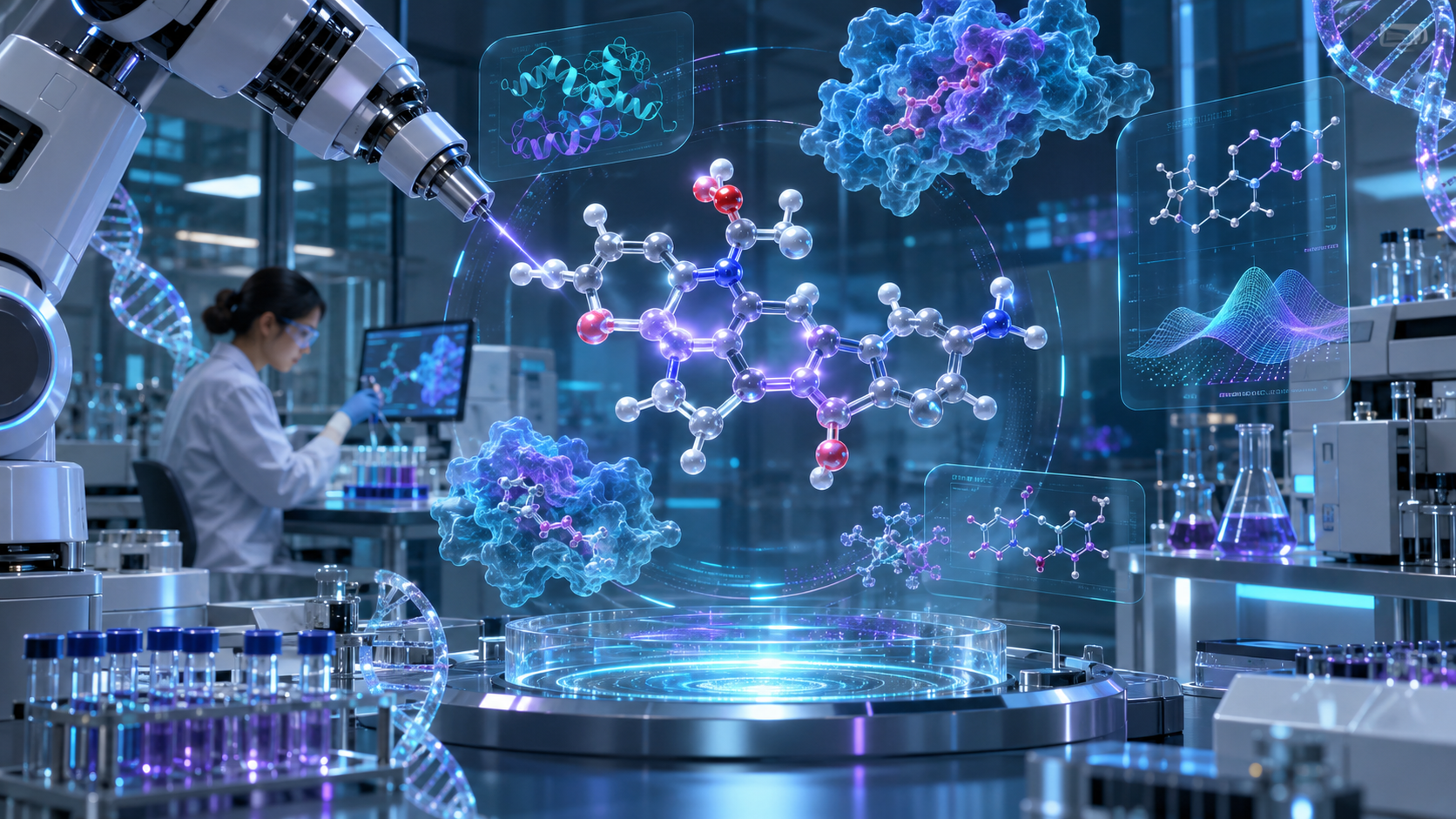
Introduction: A New Era in Pharmaceutical Research
Developing a new medicine is one of the most complicated, expensive and time-consuming processes in modern science. A potential treatment may spend years undergoing laboratory experiments, chemical testing, safety assessments and clinical trials before it can become an approved medicine.
Researchers must identify the biological cause of a disease, discover a suitable molecular target, design compounds that interact with that target, and determine whether those compounds can safely produce the desired therapeutic effect.
However, artificial intelligence (AI) is beginning to change how scientists approach these challenges.
Instead of relying exclusively on traditional laboratory screening and time-consuming experimental methods, researchers can now use machine learning, deep learning and generative AI to analyse enormous biological datasets, predict molecular interactions and design potential drug candidates.
These technologies are opening new possibilities in pharmaceutical research, particularly in areas where conventional drug discovery has struggled to produce effective treatments.
From identifying disease-associated proteins to predicting how potential medicines interact with biological systems, AI is becoming an increasingly important tool in modern biotechnology.
But an important question remains: Can artificial intelligence actually develop medicines faster than human researchers, and can these AI-designed drugs successfully treat diseases in real patients?
To understand the answer, we need to examine how AI-powered drug discovery works, the scientific breakthroughs behind it, and the challenges that researchers still need to overcome.
1. Why Traditional Drug Discovery Takes So Long
Before understanding the contribution of AI, it is important to understand why developing new medicines is so difficult.
Traditional drug discovery involves several interconnected stages, each requiring extensive scientific investigation.
1.1 Identifying the Biological Target
The first major challenge is identifying what should be targeted inside the human body.
Many diseases involve changes in specific proteins, genes, enzymes, receptors or cellular pathways.
For example, certain cancers are associated with abnormal signalling proteins that promote uncontrolled cell growth. Researchers may investigate these proteins as potential therapeutic targets.
However, identifying a protein associated with a disease does not automatically mean that blocking or modifying it will improve the condition.
Scientists must establish whether the target plays a meaningful role in disease development and whether it can be safely influenced.
1.2 Discovering Potential Drug Compounds
Once a promising target has been identified, researchers search for molecules capable of interacting with it.
This process traditionally involves screening chemical libraries containing thousands or millions of compounds.
Scientists investigate whether individual molecules can bind to the target, influence its activity and produce the desired biological response.
Many compounds fail because they do not interact strongly enough, produce unwanted effects or cannot reach the intended location inside the body.
1.3 Testing Safety and Effectiveness
Promising compounds undergo further laboratory testing and preclinical evaluation.
Researchers investigate their toxicity, absorption, distribution, metabolism and elimination.
Only selected candidates proceed into human clinical trials, where their safety and effectiveness must be investigated in increasingly rigorous stages.
Even after years of research, a promising drug candidate may fail because it produces unexpected side effects or does not provide sufficient clinical benefit.
1.4 The Cost and Time Challenge
Drug development is associated with substantial financial investment and lengthy research timelines.
The 2025 Nature Medicine study on AI-discovered rentosertib describes conventional drug development as a process that can involve approximately 10–15 years and US$2–3 billion.
This creates a major challenge for pharmaceutical companies and research institutions.
The industry needs approaches that can explore biological possibilities more efficiently, reduce unnecessary experiments and identify promising drug candidates earlier.
This is where artificial intelligence is attracting significant scientific attention.
2. What Is AI-Powered Drug Discovery?
AI-powered drug discovery refers to the application of artificial intelligence and machine learning technologies to identify, design, evaluate and optimise potential therapeutic compounds.
These technologies analyse large amounts of biological, chemical and medical information to identify patterns that may be difficult for researchers to recognise through conventional approaches alone.
AI systems can examine molecular structures, protein sequences, genetic information, scientific publications and experimental results.
Based on these datasets, they can generate predictions about how biological molecules behave and which chemical compounds may have therapeutic potential.
Several AI technologies are particularly important in this field.
2.1 Machine Learning
Machine learning allows computer systems to identify patterns in data and use those patterns to make predictions.
In drug discovery, machine learning models can be trained using information about previously studied compounds, including their chemical structures, biological activity and toxicity.
After training, these models can help researchers predict whether new compounds might interact with a particular biological target.
For example, a machine learning system may analyse thousands of chemical structures and identify molecules that appear promising for further laboratory investigation.
This helps scientists prioritise compounds rather than testing every possibility experimentally.
2.2 Deep Learning
Deep learning is a specialised branch of machine learning that uses artificial neural networks containing multiple computational layers.
These networks can identify complex relationships in biological and chemical datasets.
Deep learning has applications in:
- Predicting protein structures.
- Analysing molecular interactions.
- Identifying disease-associated biological patterns.
- Predicting chemical properties.
- Supporting toxicity assessment.
- Discovering relationships between genes, proteins and diseases.
Its ability to process complex information makes it particularly valuable in modern computational biology.
2.3 Generative Artificial Intelligence
Generative AI is one of the most exciting developments in pharmaceutical research.
Traditional computational approaches often focus on selecting or evaluating molecules that already exist in chemical databases.
Generative AI takes this concept further by proposing entirely new molecular structures.
Researchers can provide an AI model with information about a biological target or desired molecular properties. The system can then generate potential chemical structures for further evaluation.
These molecules must still undergo chemical synthesis, laboratory testing and optimisation.
Nevertheless, generative AI offers a way to explore chemical possibilities that researchers might not have considered using conventional screening methods.
2.4 Natural Language Processing
Natural language processing (NLP) allows computers to interpret and analyse human language.
In pharmaceutical research, NLP can help extract useful information from scientific publications, patents, clinical trial reports and biomedical databases.
For example, researchers may use NLP systems to identify relationships between a disease, a protein and previously investigated therapeutic compounds.
This can make literature analysis and scientific information retrieval more efficient.
3. How AI Is Transforming Different Stages of Drug Discovery
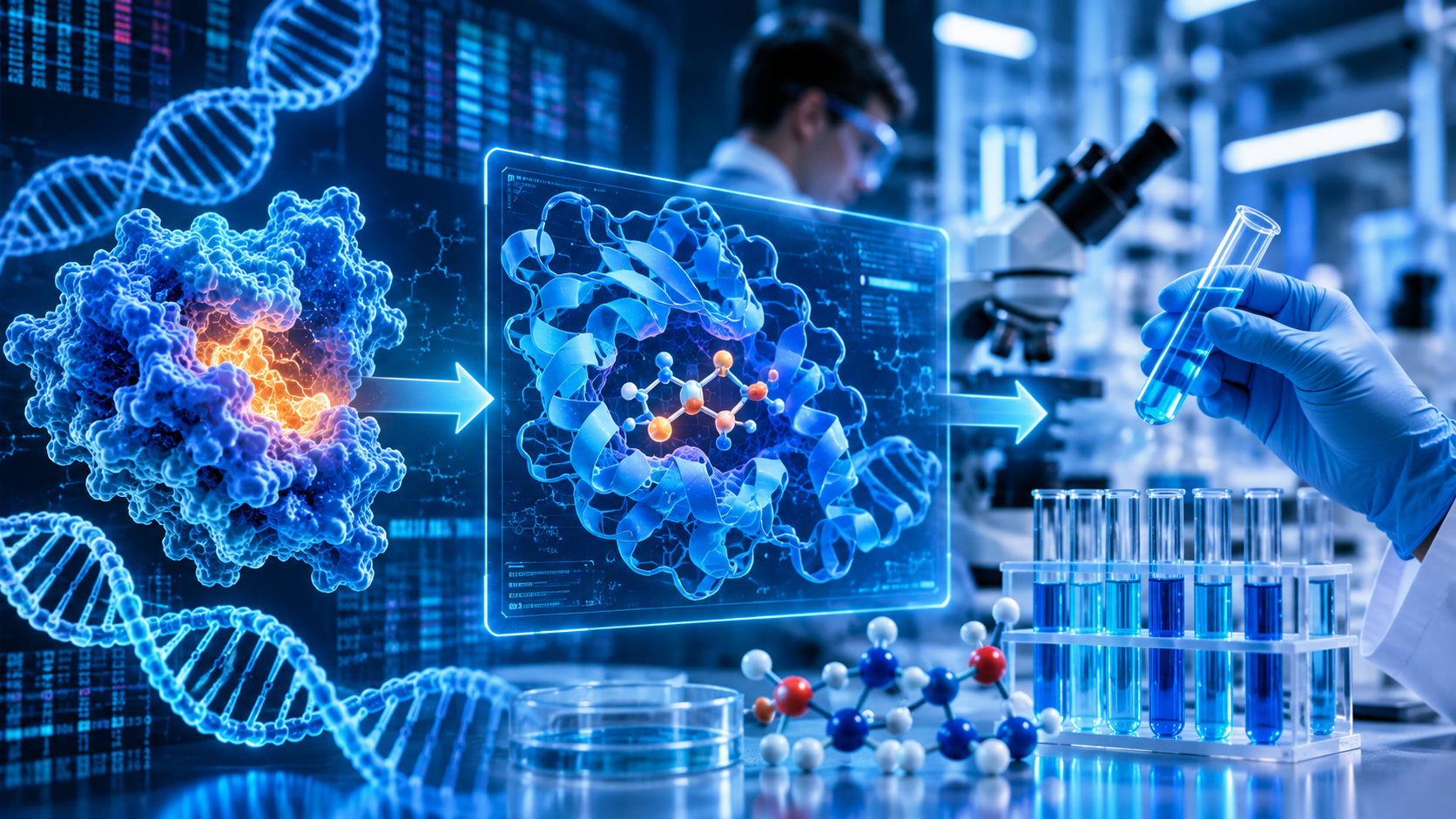
AI is not limited to designing molecules. Its applications extend across several stages of pharmaceutical research and development.
3.1 Identifying New Drug Targets
Finding the right biological target is one of the most important stages in developing a new medicine.
AI systems can analyse genomic information, gene expression patterns, protein networks and disease-related datasets to identify potential therapeutic targets.
For example, researchers investigating Alzheimer’s disease may use computational models to analyse molecular pathways associated with neuronal damage, protein accumulation and inflammation.
These models can help prioritise biological mechanisms for further experimental investigation.
However, computational associations do not establish that a target causes a disease. Laboratory and clinical evidence remain essential.
3.2 Predicting Protein Structures
Proteins perform essential functions throughout the human body.
Their biological activity depends heavily on their three-dimensional structures and interactions with other molecules.
Understanding protein structure is therefore important when designing medicines that interact with specific biological targets.
One of the most significant breakthroughs in this area came from AlphaFold.
Developed by Google DeepMind, AlphaFold uses artificial intelligence to predict protein structures from amino acid sequences.
AlphaFold 2 significantly advanced computational protein structure prediction, while AlphaFold 3 expanded the technology to predict structures involving proteins, DNA, RNA, small molecules, ions and other biological components.
The 2024 research paper published in Nature, titled Accurate Structure Prediction of Biomolecular Interactions with AlphaFold 3, demonstrated substantial improvements in predicting several types of molecular interactions.
This technology can help researchers investigate how potential drug molecules may interact with biological targets.
Importantly, AlphaFold predictions are not a replacement for experimental structural biology or direct drug testing.
3.3 Virtual Screening of Chemical Compounds
Traditional drug discovery may require researchers to experimentally screen enormous collections of chemical compounds.
AI-powered virtual screening offers another approach.
Computational models can evaluate large chemical libraries and rank molecules according to predicted properties such as:
- Potential binding affinity.
- Molecular compatibility.
- Chemical stability.
- Solubility.
- Drug-like properties.
- Potential toxicity.
Instead of experimentally testing every compound, researchers can prioritise a smaller selection for further investigation.
This can reduce the experimental workload and help research teams focus on more promising candidates.
3.4 Designing New Drug Molecules
Generative AI is making it possible to propose molecular structures based on specific scientific requirements.
Researchers can use these systems to generate compounds with desired chemical characteristics or predicted interactions with a particular protein.
For example, an AI model may be instructed to propose molecules that interact with an enzyme involved in cancer development.
The system can generate candidate structures that can then be evaluated using molecular simulations, chemical synthesis and laboratory experiments.
Researchers may repeatedly refine the molecular structures based on experimental results.
This process creates a feedback loop between computational predictions and laboratory validation.
3.5 Predicting Drug Toxicity and Side Effects
A molecule may interact successfully with its intended biological target but still produce harmful effects elsewhere in the body.
This is one of the major reasons why potential medicines fail during development.
AI models can analyse existing toxicology datasets and identify patterns associated with potentially harmful chemical structures.
They can help researchers estimate:
- Potential liver toxicity.
- Cardiac safety concerns.
- Drug metabolism.
- Possible interactions with other medications.
- Unwanted biological activity.
These predictions can help prioritise compounds for safety testing.
However, AI toxicity predictions are not sufficient to establish that a medicine is safe for human use.
3.6 Drug Repurposing
Developing a completely new medicine is not the only way to discover potential treatments.
Drug repurposing involves investigating whether an existing medicine could be useful for treating a different disease.
AI systems can analyse relationships between diseases, molecular targets, gene expression profiles and existing drug mechanisms.
For example, a medicine originally developed for one condition might show potential activity against another biological pathway.
AI can help researchers identify such possibilities more efficiently.
Nevertheless, repurposed medicines must still undergo appropriate testing to establish their effectiveness, dosage and safety for the new condition.
4. Real-World Breakthroughs: When AI-Designed Drugs Enter Human Trials
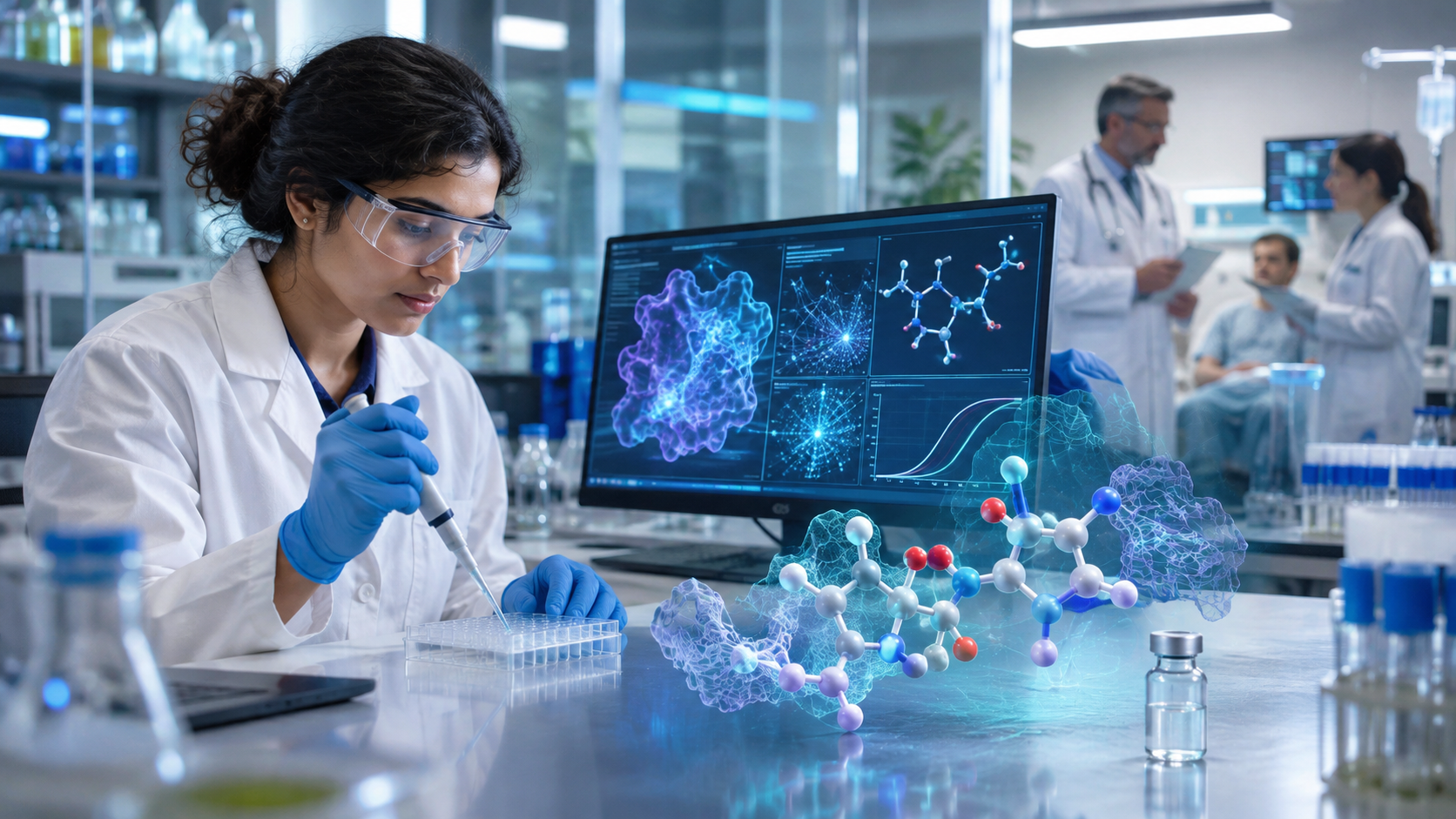
One of the strongest ways to evaluate AI-powered drug discovery is to examine actual research projects rather than relying entirely on theoretical predictions.
A particularly important example emerged in 2025.
4.1 Rentosertib: An AI-Discovered Drug for Pulmonary Fibrosis
In June 2025, researchers published a major clinical study in Nature Medicine investigating rentosertib, formerly known as ISM001-055.
The compound was developed using generative AI-driven drug discovery approaches by Insilico Medicine.
It was designed to inhibit a protein called TNIK, or Traf2- and Nck-interacting kinase.
The research focused on idiopathic pulmonary fibrosis (IPF), a progressive lung disease characterised by the development of scar tissue within lung tissue.
As fibrosis progresses, the lungs become increasingly stiff, making it difficult for patients to breathe.
Researchers used AI-driven approaches to identify TNIK as a potential therapeutic target and develop a molecule designed to inhibit its activity.
The development process demonstrated how computational tools could contribute to both target identification and molecular design.
What happened in the clinical trial?
The 2025 study reported results from a randomised, double-blind, placebo-controlled Phase 2a clinical trial.
A total of 71 patients with idiopathic pulmonary fibrosis participated in the study.
Participants received different doses of rentosertib or a placebo over a 12-week treatment period.
The researchers investigated safety, tolerability and changes in lung function.
At the highest once-daily dosage, the mean change in forced vital capacity was approximately +98.4 mL, compared with approximately -20.3 mL in the placebo group.
Forced vital capacity measures the maximum amount of air a person can forcibly exhale after taking a deep breath.
The researchers concluded that the findings supported further investigation of rentosertib in larger and longer clinical trials.
Why is this important?
Rentosertib represents an important example of an AI-discovered drug progressing beyond computational predictions and early laboratory research into human clinical testing.
The research also demonstrated the potential of generative AI to support target identification and molecular development.
However, a Phase 2a result does not establish that a drug is an approved or proven treatment.
Further clinical studies are necessary to determine whether the compound provides consistent benefits and acceptable safety in larger patient populations.
The significance of this research lies in demonstrating that AI-assisted discovery can contribute to real therapeutic candidates being evaluated in humans.
5. AlphaFold and the Future of AI-Driven Molecular Research
Another important development in AI-powered drug discovery is the growing use of advanced protein prediction systems.
For decades, understanding the three-dimensional structure of proteins has been a major challenge in molecular biology.
Experimental approaches such as X-ray crystallography, nuclear magnetic resonance spectroscopy and cryo-electron microscopy have provided essential information about protein structures.
However, these techniques can require considerable time, specialised equipment and technical expertise.
AlphaFold has changed the computational side of this research.
By predicting protein structures using amino acid sequences, it has provided scientists with new opportunities to investigate biological systems.
AlphaFold 3 extended these capabilities by modelling interactions involving proteins, DNA, RNA and small molecules.
This is particularly relevant to drug discovery because medicines often work by binding to proteins or influencing molecular interactions.
For example, researchers studying a potential cancer treatment may investigate how a candidate compound interacts with a protein involved in tumour growth.
Advanced structure-prediction systems can help generate hypotheses about these interactions.
However, a predicted molecular structure does not automatically establish that a compound will bind effectively under real biological conditions or produce a therapeutic effect in humans.
Experimental validation remains essential.
6. Can AI Reduce the Time and Cost of Developing Medicines?
The potential to reduce drug development time and financial costs is one of the main reasons pharmaceutical companies are investing in AI.
Traditional discovery approaches frequently involve repeated experimental screening and molecular optimisation.
AI can help researchers prioritise experiments, explore chemical possibilities and identify promising compounds earlier.
For example, generative AI can propose multiple candidate molecules, while machine learning models can rank them according to predicted chemical and biological properties.
This may reduce the number of compounds requiring extensive experimental investigation.
In the case of rentosertib, the researchers reported that their AI-enabled approach streamlined preclinical candidate nomination to approximately 18 months.
This is an important example of how AI can contribute to a more efficient discovery process.
However, it is important to distinguish between accelerating drug discovery and accelerating the entire drug development process.
Clinical trials still require patient recruitment, ethical approval, monitoring, data collection and rigorous evaluation.
Even when AI helps identify a promising molecule, establishing its safety and effectiveness can take years.
Therefore, AI may shorten particular research stages without necessarily eliminating the lengthy clinical development process.
7. The Role of AI in Clinical Trials
The contribution of artificial intelligence does not end when a potential drug enters human testing.
AI can also support clinical research by helping investigators organise information and improve aspects of trial planning.
7.1 Patient Recruitment
Clinical trials require participants who meet specific eligibility criteria.
Finding suitable patients can be challenging, particularly for rare diseases.
AI systems can analyse clinical records and other permitted medical datasets to help identify individuals who may meet trial requirements.
This can support recruitment and reduce delays.
7.2 Patient Stratification
Not every patient responds to a treatment in the same way.
Differences in genetics, age, disease severity and biological characteristics can influence treatment outcomes.
Machine learning models can help researchers identify patient subgroups that may respond differently to a particular therapy.
This could contribute to more targeted clinical research.
7.3 Monitoring and Data Analysis
Clinical trials generate large amounts of information, including laboratory results, medical observations and treatment outcomes.
AI can assist with identifying patterns, monitoring data quality and analysing complex datasets.
These applications may help researchers detect important trends more efficiently.
However, clinical decisions must remain subject to appropriate medical and regulatory oversight.
8. Major Challenges and Limitations of AI-Powered Drug Discovery
Despite its potential, AI-powered drug discovery is not without limitations.
Artificial intelligence can make predictions, generate molecules and analyse complex information, but it cannot independently guarantee that a proposed treatment will work in humans.
Several important scientific challenges remain.
8.1 Poor-Quality Training Data
AI models depend heavily on the information used to train them.
If datasets contain errors, incomplete measurements or biased information, the resulting predictions may be unreliable.
Drug discovery datasets can also differ in experimental conditions, measurement methods and data quality.
These inconsistencies can affect the performance of computational models.
8.2 Biological Complexity
The human body is an extraordinarily complex biological system.
A molecule that performs well in a computer simulation may behave differently inside a living organism.
Biological processes involve multiple interacting pathways, tissues, enzymes and immune responses.
Predicting these interactions accurately remains difficult.
8.3 Laboratory Validation Is Still Necessary
AI-generated compounds must be synthesised and experimentally tested.
Researchers need to establish whether a proposed molecule actually interacts with its intended target and produces the predicted biological response.
Computer-generated results alone cannot establish therapeutic effectiveness.
8.4 Unexpected Toxicity
A compound may appear promising during early computational and laboratory investigations but produce harmful effects during later testing.
AI models may fail to predict certain adverse reactions, especially when those effects depend on complex biological interactions.
For this reason, preclinical safety studies and clinical evaluation remain necessary.
8.5 The Clinical Translation Gap
One of the most important challenges is translating computational discoveries into successful treatments.
A molecule may show promising results in laboratory experiments but fail during human clinical trials.
This can happen because of poor absorption, insufficient drug exposure, unexpected toxicity or a lack of meaningful therapeutic benefit.
AI can help improve candidate selection, but it cannot eliminate the biological uncertainty involved in human drug development.
8.6 Explainability and Scientific Transparency
Some advanced AI models operate as complex systems whose predictions are difficult to interpret.
Researchers need to understand why a model recommends a particular molecule or identifies a specific biological target.
Scientific transparency, reproducibility and independent validation are essential for building confidence in AI-assisted discoveries.
9. Ethical and Regulatory Considerations
As AI becomes more involved in pharmaceutical research, regulators and research organisations must ensure that its use remains scientifically reliable and safe.
In January 2025, the United States Food and Drug Administration (FDA) published draft guidance titled:
Considerations for the Use of Artificial Intelligence to Support Regulatory Decision-Making for Drug and Biological Products.
The guidance discusses a risk-based framework for assessing the credibility of AI models used to generate evidence supporting regulatory decisions.
In January 2026, the FDA and European Medicines Agency (EMA) also published Guiding Principles of Good AI Practice in Drug Development.
These principles address important areas including:
- Human-centred AI development.
- Risk-based assessment.
- Scientific and technical standards.
- Clearly defined applications.
- Data governance and documentation.
- Model performance and reliability.
- Appropriate human oversight.
- Transparency and accountability.
These developments demonstrate that the responsible use of AI in pharmaceutical research requires more than computational performance.
It also requires reliable evidence, appropriate oversight and a clear understanding of how AI-generated information is used.
10. What Does the Future Hold for AI-Powered Drug Discovery?
The future of AI in pharmaceutical research will likely involve closer integration between computational models, automated laboratories and experimental biology.
Several emerging developments could influence the next generation of drug discovery.
10.1 Autonomous Research Laboratories
Automated laboratory systems can combine robotic equipment, computational models and experimental testing.
In these environments, AI may help select the next experiment based on previous results.
The system can propose a molecule, coordinate its testing and analyse the resulting data.
Researchers can then use the findings to refine future experiments.
This approach may create more efficient cycles of computational prediction and laboratory validation.
10.2 Personalised Drug Development
Advances in genomics and computational biology may help researchers develop treatments that account for individual biological differences.
AI could assist in analysing genetic variations, molecular biomarkers and disease characteristics to identify potential treatment strategies.
This may contribute to the development of more personalised approaches to medicine.
10.3 Treatments for Rare Diseases
Rare diseases often present significant challenges because relatively little biological and clinical data may be available.
AI could help researchers identify disease-associated genes, investigate molecular pathways and explore potential drug candidates.
However, limited datasets remain a major challenge for reliable predictions.
10.4 More Advanced Generative Models
Future generative models may become better at proposing molecules with multiple desired properties.
Instead of focusing only on how strongly a molecule binds to a target, researchers may increasingly consider several factors simultaneously, including:
- Biological activity.
- Chemical stability.
- Solubility.
- Selectivity.
- Metabolic properties.
- Potential toxicity.
- Manufacturing feasibility.
This could help researchers identify more balanced drug candidates earlier in the development process.
10.5 Integration of AI and Experimental Biology
Perhaps the most important development will be the integration of artificial intelligence with real experimental research.
AI systems are powerful at processing information and identifying patterns, while laboratory experiments establish whether scientific predictions are correct.
Combining these approaches may create a more efficient and productive drug discovery environment.
The future of pharmaceutical research is therefore unlikely to involve AI replacing scientists. Instead, it may involve scientists using AI to investigate biological possibilities that would otherwise be difficult, expensive or time-consuming to explore.
11. Will Artificial Intelligence Replace Human Drug Researchers?
The increasing capabilities of AI have raised questions about the future role of human scientists.
However, drug discovery requires more than identifying patterns or generating chemical structures.
Researchers must understand disease biology, design meaningful experiments, interpret unexpected findings and evaluate the clinical relevance of scientific results.
AI can assist with computational analysis, molecular prediction and candidate optimisation.
Human researchers remain essential for:
- Developing scientific hypotheses.
- Designing experiments.
- Evaluating biological evidence.
- Investigating unexpected results.
- Assessing patient safety.
- Interpreting clinical outcomes.
- Making scientific and ethical decisions.
The most effective future research environments will likely combine human scientific expertise with advanced computational capabilities.
Conclusion: AI Is Changing How Medicines Are Discovered
Artificial intelligence is introducing new possibilities into one of the most challenging areas of modern biotechnology.
From identifying biological targets and predicting protein structures to designing new molecules and supporting clinical research, AI is transforming several stages of pharmaceutical discovery.
Research involving AlphaFold 3 and the AI-discovered drug candidate rentosertib demonstrates that these technologies are progressing beyond theoretical applications and contributing to real scientific and clinical investigations.
Nevertheless, major challenges remain.
AI-generated predictions must be validated experimentally, potential medicines must undergo rigorous safety assessments, and clinical trials must establish whether treatments provide meaningful benefits to patients.
The real breakthrough may not be the development of an AI system that independently creates medicines.
Instead, it may be the development of a research environment in which artificial intelligence and human scientists work together to discover treatments more efficiently, explore previously inaccessible biological possibilities and ultimately improve the future of medicine.
The question is no longer whether artificial intelligence can contribute to drug discovery. It is how effectively scientists can use it to turn computational predictions into safe and effective treatments for patients.
Frequently Asked Questions (FAQs)
1. What is AI-powered drug discovery?
AI-powered drug discovery uses artificial intelligence and machine learning to identify biological targets, predict molecular interactions, design potential drug compounds and support pharmaceutical research.
2. Can AI develop medicines faster than traditional methods?
AI can accelerate specific stages of drug discovery, including target identification, virtual screening and molecular design. However, clinical trials and regulatory evaluation still require extensive time and scientific validation.
3. What is AlphaFold, and why is it important?
AlphaFold is an AI-based protein structure prediction system developed by Google DeepMind. It helps researchers investigate the three-dimensional structures of proteins and their interactions with other molecules.
4. What is generative AI in drug discovery?
Generative AI uses computational models to propose new molecular structures with desired chemical or biological properties. Researchers then evaluate these structures through computational and experimental methods.
5. Has an AI-designed drug entered human clinical trials?
Yes. Rentosertib, an AI-discovered and AI-designed drug candidate for idiopathic pulmonary fibrosis, has progressed into human clinical trials, including a Phase 2a study published in Nature Medicine in June 2025.
6. Can AI replace pharmaceutical researchers?
No. AI can assist with data analysis, molecular design and scientific predictions, but human researchers remain essential for experimental validation, clinical interpretation, safety evaluation and ethical decision-making.
7. What are the biggest challenges of AI-powered drug discovery?
Major challenges include poor-quality datasets, inaccurate predictions, biological complexity, unexpected toxicity, limited model explainability and difficulties translating computational discoveries into successful clinical treatments.
8. Which diseases could benefit from AI-powered drug discovery?
Potential applications include cancer, neurological disorders, infectious diseases, cardiovascular conditions, genetic disorders and rare diseases. However, successful treatments must be established through appropriate research and clinical testing.
Scientific References and Further Reading
The following peer-reviewed publications and official regulatory resources provide the scientific foundation for this article.
- Rentosertib: A generative AI-discovered TNIK inhibitor for idiopathic pulmonary fibrosis — Nature Medicine (2025).
https://doi.org/10.1038/s41591-025-03743-2 - Accurate Structure Prediction of Biomolecular Interactions with AlphaFold 3 — Nature (2024).
https://doi.org/10.1038/s41586-024-07487-w - AI-Driven Drug Discovery: A Comprehensive Review — ACS Omega (2025).
https://doi.org/10.1021/acsomega.5c00549 - Artificial Intelligence in Drug Development — Nature Medicine (2025).
https://doi.org/10.1038/s41591-024-03434-4 - Artificial Intelligence for Drug Discovery: Are We There Yet? — Annual Review of Pharmacology and Toxicology (2024).
https://doi.org/10.1146/annurev-pharmtox-040323-040828 - Unleashing the Power of Generative AI in Drug Discovery — Drug Discovery Today (2024).
https://doi.org/10.1016/j.drudis.2024.103992 - Considerations for the Use of Artificial Intelligence to Support Regulatory Decision-Making for Drug and Biological Products — US FDA (2025).
https://www.fda.gov/regulatory-information/search-fda-guidance-documents/considerations-use-artificial-intelligence-support-regulatory-decision-making-drug-and-biological - Guiding Principles of Good AI Practice in Drug Development — FDA and EMA (2026).
https://www.fda.gov/media/189581/download