
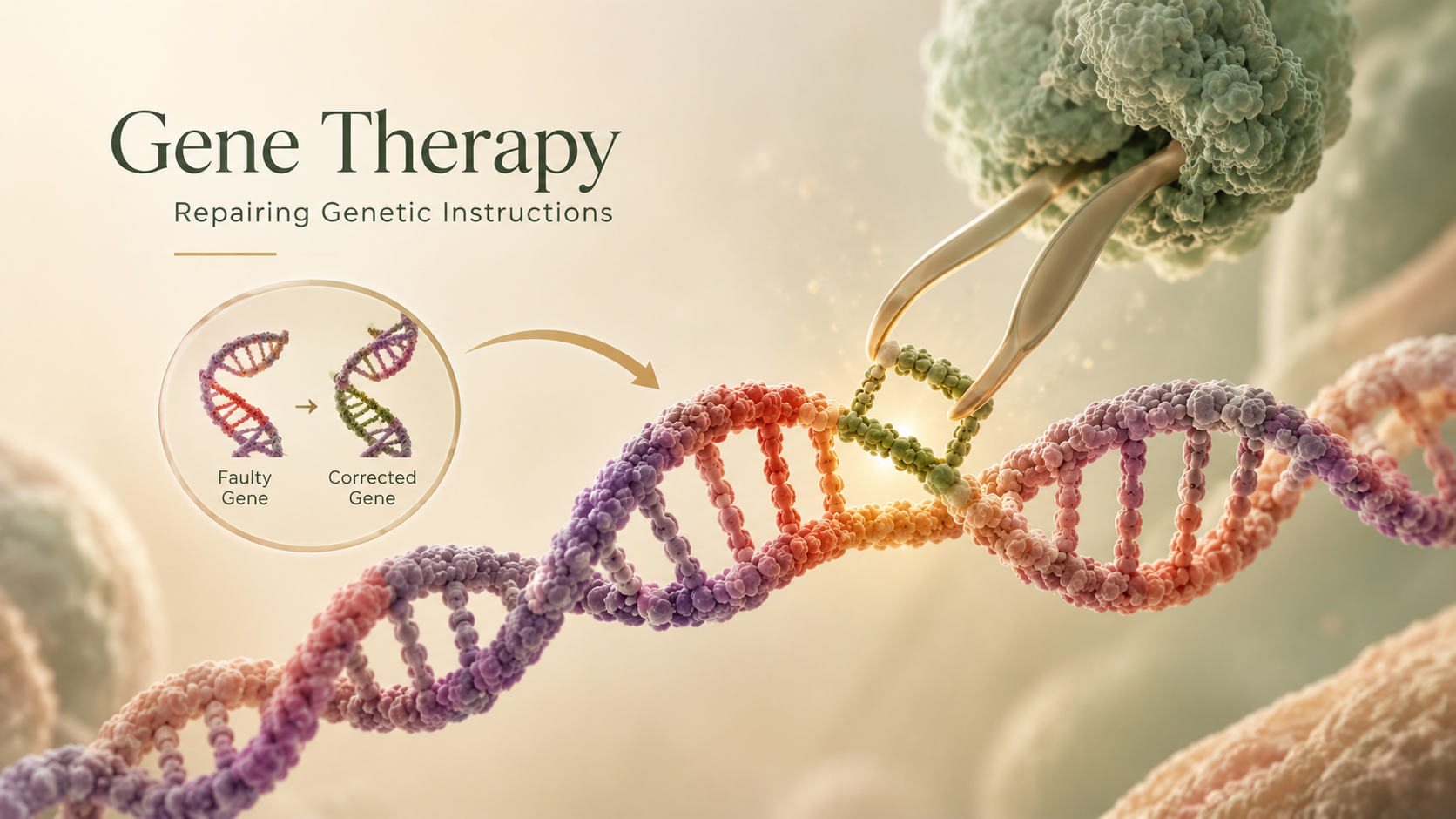
 Gene therapy is no longer just a scientific dream. It is becoming one of the most exciting areas in modern medicine, with the potential to treat diseases at their genetic root instead of only managing symptoms.
In the future, gene therapy may help doctors treat inherited disorders, cancers, neurological diseases, and rare conditions more effectively. The field is also moving fast because of better gene editing tools, improved viral vectors, and growing clinical trial activity.
What Is Gene Therapy?
Gene therapy is a medical approach that changes or replaces faulty genes to treat disease. Instead of simply controlling symptoms, it aims to fix the underlying genetic problem.
There are two major approaches:
Gene addition, where a healthy copy of a gene is delivered.
Gene editing, where the faulty DNA itself is corrected using tools like CRISPR.
Why Gene Therapy Matters
Gene therapy matters because it can offer long-lasting or even curative treatment for diseases that are difficult to manage with standard drugs. This is especially important for genetic blood disorders, immune disorders, eye diseases, and some cancers.
Unlike conventional treatment, gene therapy can target the root cause instead of repeating lifelong medication. That makes it one of the biggest shifts in the future of healthcare.
Key Trends Shaping the Future
1. CRISPR and gene editing
CRISPR is making gene therapy more precise by allowing scientists to directly edit DNA. Newer tools like base editing and prime editing are also expanding what can be corrected.
2. Better delivery systems
A major challenge in gene therapy is getting the therapeutic material into the right cells safely. AAV vectors and lentiviral systems remain important, but researchers are also working on safer and more efficient delivery methods.
3. More treatments in clinics
Clinical trial activity is growing, and more gene therapies are reaching patients. A 2025 review of clinical trials found thousands of studies across different diseases, showing how quickly the field is expanding.
4. Longer-term safety and durability
One major focus now is whether treatments keep working for years. Recent industry reporting shows that durability, safety monitoring, and long-term follow-up are becoming central to gene therapy development.
5. Lower-cost and scalable manufacturing
Manufacturing is still expensive and complex. The future of gene therapy depends on making production more efficient so therapies can reach more patients at lower cost.
Challenges Still Ahead
Even though gene therapy is promising, several problems still need to be solved.
Safety risks remain, especially immune reactions and unintended genetic effects.
Manufacturing is complicated and costly, especially for personalized treatments.
Some therapies need conditioning chemotherapy, which adds side effects and risk.
Access and reimbursement are major issues because many treatments are priced very high.
These challenges do not stop the field, but they do show why progress must be careful and evidence-based.
Future Applications
Gene therapy is likely to grow in several areas:
Rare inherited diseases.
Blood disorders like sickle cell disease and thalassemia.
Eye diseases and neurological conditions.
Cancer immunotherapy, including CAR-T and related cell therapies.
In vivo therapies, where treatment is delivered directly inside the body.
This means gene therapy could move from a niche treatment for rare diseases into a more common part of precision medicine.
Conclusion
The future of gene therapy looks very strong. Better gene editing, improved delivery systems, and growing clinical experience are pushing the field toward more effective treatments.
References
Successes and challenges in clinical gene therapy —PMChttps://pmc.ncbi.nlm.nih.gov/articles/PMC10678346/
A primer to gene therapy: Progress, prospects, and problems —Wiley Online Library https://onlinelibrary.wiley.com/doi/10.1002/jimd.12270
Advancements in gene therapy for human diseases: Trend of clinical trials — https://www.sciencedirect.com/science/article/pii/S0014299924008331
2026 cell and gene therapy predictions — Insights.bio https://www.cellgenetherapyreview.com/3975-Featured-Articles/624038-2026-cell-and-gene-therapy-predictions/
Cell & Gene Therapy in 2026: The Year the Field Grew Up — Industry article https://www.linkedin.com/pulse/cell-gene-therapy-2026-year-field-grew-up-bilal-bham-iw7bf/