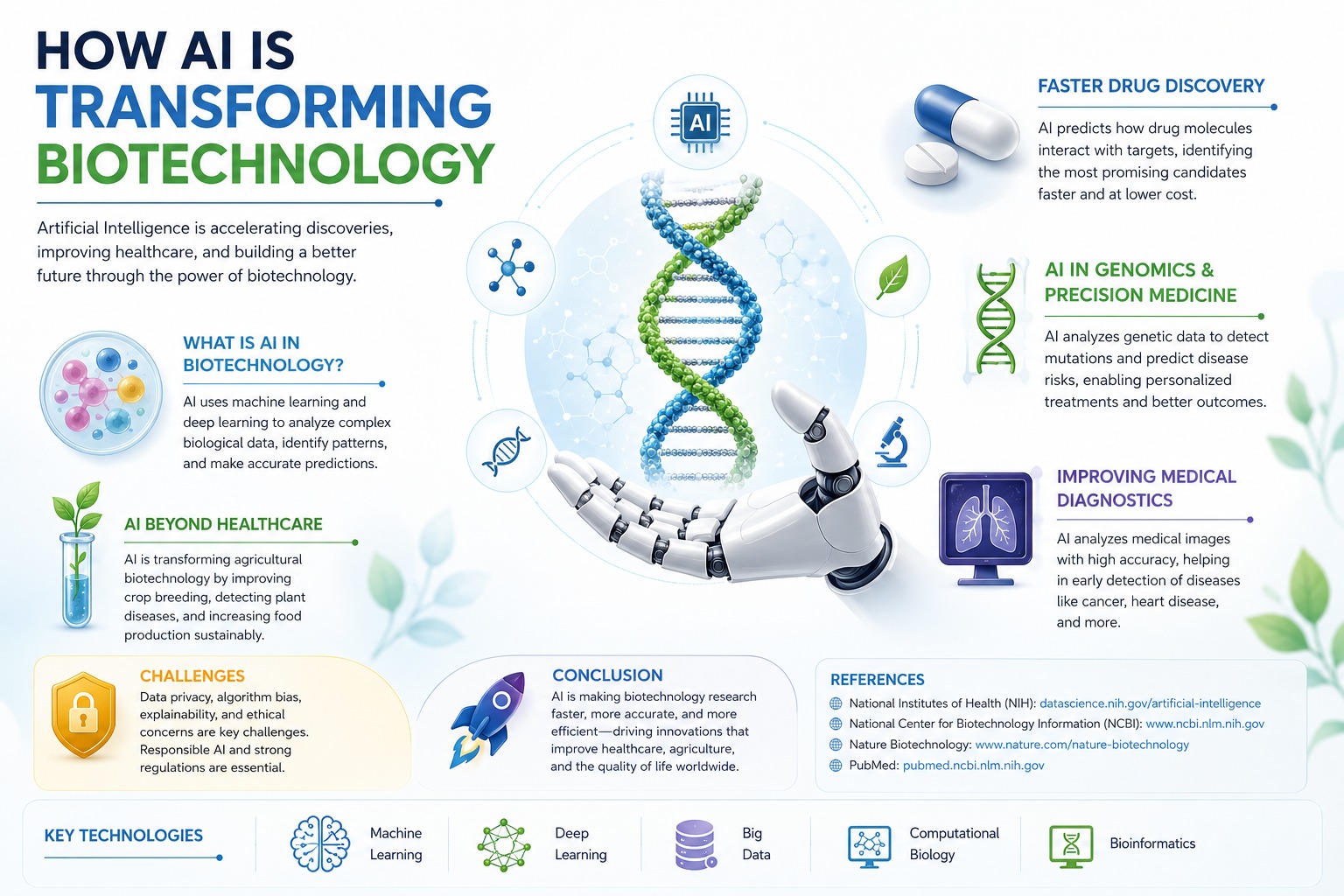
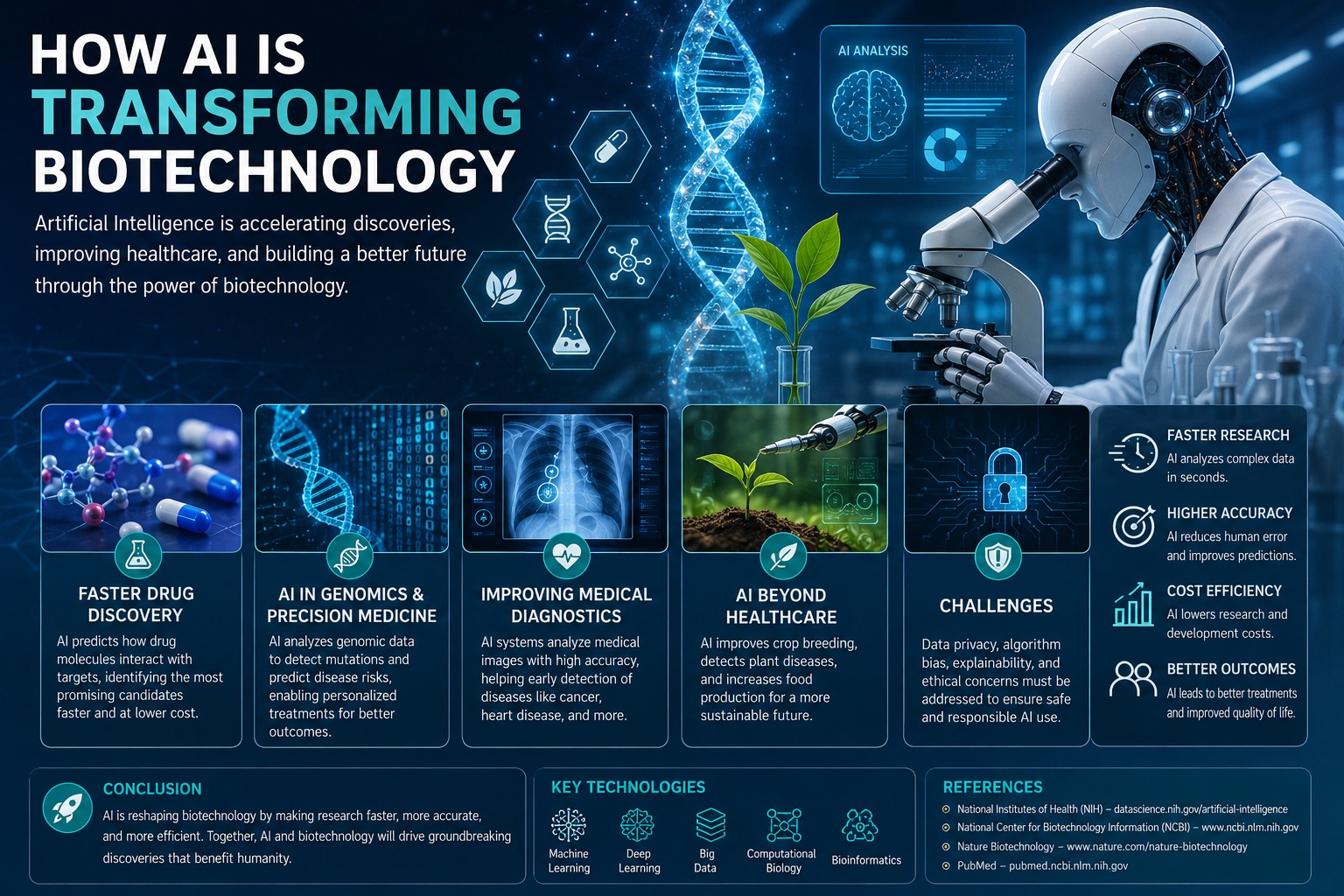
Artificial Intelligence (AI) is revolutionizing biotechnology by enabling scientists to analyze complex biological data, accelerate research, and develop innovative healthcare solutions. From drug discovery to genomics and precision medicine, AI is helping researchers solve biological challenges faster and more accurately than ever before. As biotechnology continues to evolve, AI has become an essential tool for advancing scientific discovery and improving patient care.
What Is AI in Biotechnology?
AI in biotechnology involves using machine learning and deep learning algorithms to process large biological datasets, identify patterns, and make predictions. These technologies assist researchers in understanding diseases, discovering new medicines, analyzing DNA, and improving laboratory efficiency.
Faster Drug Discovery
Developing a new drug traditionally takes many years and requires significant investment. AI accelerates this process by predicting how potential drug molecules interact with disease targets and identifying the most promising candidates before laboratory testing. This reduces both development time and costs while increasing the chances of successful treatments.
AI in Genomics and Precision Medicine
AI can analyze massive amounts of genomic data to detect genetic mutations and predict disease risks. This information supports precision medicine, where treatments are tailored to an individual’s genetic profile, improving effectiveness and minimizing side effects.
Improving Medical Diagnostics
AI-powered systems help doctors detect diseases such as cancer, heart disease, and diabetic retinopathy by analyzing medical images with remarkable accuracy. Early detection allows for timely treatment and better patient outcomes.
AI Beyond Healthcare
AI is also transforming agricultural biotechnology by improving crop breeding, detecting plant diseases, and increasing food production. These innovations contribute to sustainable agriculture and global food security.
Challenges
Despite its benefits, AI in biotechnology faces challenges such as data privacy, algorithm bias, explainability, and ethical concerns. Responsible AI development and strong regulations are essential to ensure safe and trustworthy applications.
Conclusion
Artificial Intelligence is transforming biotechnology by making research faster, more accurate, and more efficient. Whether developing life-saving medicines, advancing personalized healthcare, or improving agriculture, AI is shaping the future of life sciences. As technology continues to advance, the combination of AI and biotechnology will drive groundbreaking discoveries that benefit society worldwide.
References
National Institutes of Health (NIH): https://datascience.nih.gov/artificial-intelligence
National Center for Biotechnology Information (NCBI): https://www.ncbi.nlm.nih.gov/books/NBK614606/
Nature Biotechnology: https://www.nature.com/nature-biotechnology
PubMed: https://pubmed.ncbi.nlm.nih.gov/