
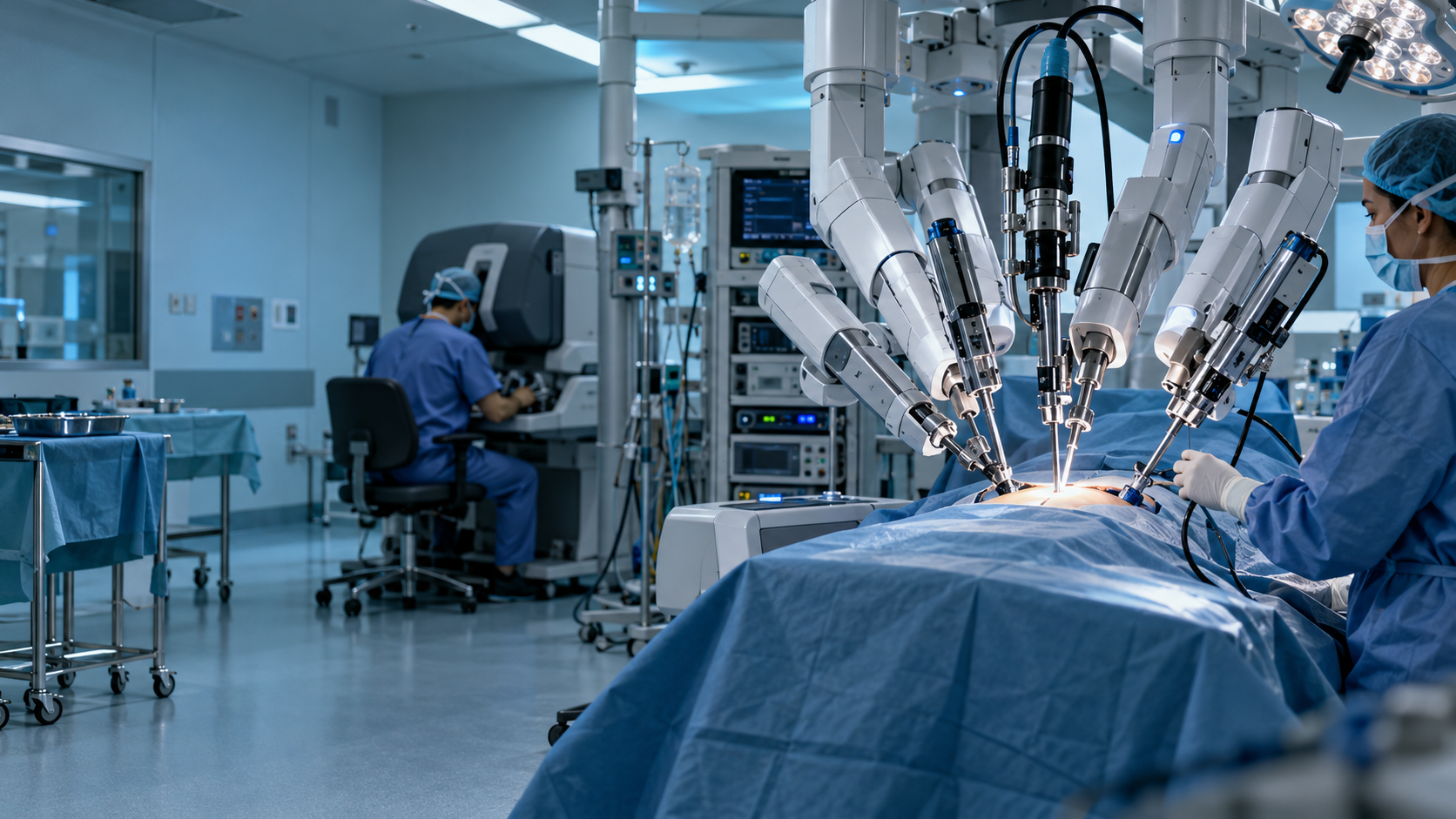
Introduction: The Rise of Robotic Surgery in Modern Healthcare
Medical technology is changing how surgeons perform complex procedures. Among the most important developments is robotic surgery, also known as robot-assisted surgery, which combines human surgical expertise with advanced engineering systems.
Robotic-assisted surgical systems allow trained surgeons to control specialized instruments through a computer interface. Depending on the system and procedure, these instruments can support delicate movements, provide magnified three-dimensional views, and help surgeons operate through small incisions.
Behind these capabilities is a multidisciplinary field involving biomedical engineering, mechanical engineering, electronics, computer science, medical imaging, and robotics.
Biomedical engineers play an essential role in developing the technologies that make modern surgical systems possible. Their work includes designing precise robotic mechanisms, integrating imaging systems, developing sensors, improving human-machine interfaces, and testing medical devices for safety and reliability.
As artificial intelligence (AI), computer vision, and surgical navigation continue to advance, robotic surgery is becoming an important research area in biomedical engineering.
What Is Robotic Surgery?
Robotic surgery is a surgical approach in which a surgeon uses a computer-controlled robotic system to manipulate specialized instruments during a medical procedure.
Unlike the common science-fiction image of a robot independently performing an operation, most widely used soft-tissue robotic surgical systems are directly controlled by trained surgeons.
A typical robotic surgical system includes a surgeon’s console, a patient-side cart with robotic arms, a camera system, surgical instruments, and supporting software and hardware.
How Is Robotic Surgery Different From Traditional Surgery?
Traditional open surgery generally involves a larger incision that allows direct access to the surgical area. Conventional minimally invasive surgery uses specialized instruments and a camera inserted through small incisions.
Robotic-assisted surgery builds on minimally invasive techniques by allowing surgeons to control instruments through a robotic interface. Depending on the system, this may provide a magnified 3D view, enhanced instrument articulation, and improved ergonomics.
The most appropriate approach depends on the patient’s condition, the procedure, the surgeon’s expertise, and the available equipment. Robotic surgery is not automatically better than every alternative.
How Does Robotic Surgery Work?
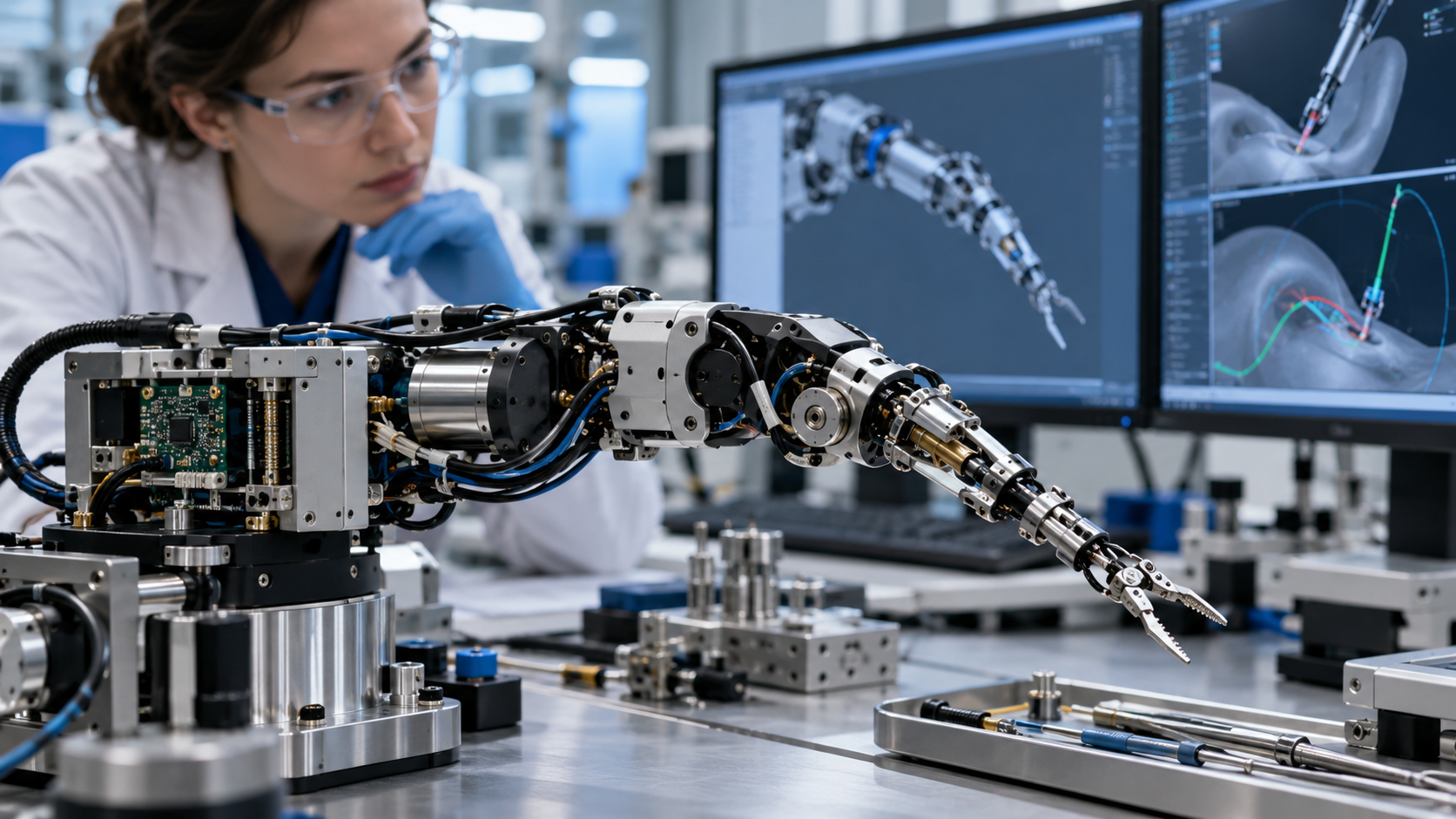
Robotic surgery combines mechanical movement, imaging, electronic control, and real-time interaction between the surgeon and the surgical system.
1. Preoperative Planning
Before surgery, clinicians may review medical images such as CT or MRI scans and use them to understand the patient’s anatomy and plan the procedure.
Depending on the technology, software may help create three-dimensional anatomical models or support surgical navigation.
Biomedical engineers contribute by developing imaging software, registration methods, planning tools, and systems that help align digital information with the patient’s anatomy.
2. Robotic Arms and Surgical Instruments
The robotic arms hold and manipulate specialized surgical instruments. Depending on the system, these instruments can provide a range of movements within a confined operating area.
Biomedical and mechanical engineers design the joints, linkages, actuators, and instrument mechanisms that enable controlled movement.
The engineering challenge is to achieve accurate motion while meeting strict requirements for reliability, sterilization, durability, and patient safety.
3. Surgeon-Controlled Console
The surgeon operates the system from a console that translates hand and foot inputs into movements of the surgical instruments.
Control software maps the surgeon’s movements to the instrument movements. Some systems can scale movements, helping the surgeon make smaller instrument movements when performing delicate tasks.
The robotic system acts as an interface between the surgeon and the instruments; the surgeon remains responsible for controlling the procedure.
4. High-Definition 3D Visualization
Many robotic surgical systems use an endoscopic camera to provide a magnified view of the surgical area. Some systems provide stereoscopic 3D visualization, which can help the surgeon perceive depth.
Biomedical engineers work on camera technology, image processing, illumination, display systems, and software that improves the usefulness of visual information.
Better visualization can support surgical decision-making, but image quality and depth perception do not eliminate the possibility of errors.
5. Motion Control and Feedback
Robotic systems rely on control algorithms to coordinate instrument movements and respond to the surgeon’s commands.
Depending on the system, engineering features may include motion scaling, tremor filtering, movement constraints, and instrument-position feedback.
Researchers are also investigating force sensing and haptic feedback, which could help surgeons better perceive the interaction between instruments and tissue. The availability of these features varies across systems.
The Role of Biomedical Engineering in Robotic Surgery
Biomedical engineering connects engineering principles with medicine to create technologies that support diagnosis, treatment, and patient care.
In robotic surgery, biomedical engineers work with surgeons, clinical researchers, software developers, and device manufacturers to translate engineering concepts into practical medical systems.
1. Mechanical and Mechatronic Design
Robotic surgical instruments must be compact, controllable, and dependable. Engineers design mechanisms that can operate within the limited space available during minimally invasive procedures.
Mechatronics combines mechanical design, electronics, sensors, and control software. This integration allows the different parts of a surgical robot to function as a coordinated system.
2. Sensors and Instrument Tracking
Sensors can help robotic systems estimate the position, orientation, or movement of instruments.
Depending on the design, technologies may include encoders, optical tracking, electromagnetic tracking, and force or torque sensors.
Sensor data can support motion control, navigation, and safety monitoring. Engineers must also account for calibration errors, interference, measurement uncertainty, and the limitations of tracking systems.
3. Medical Imaging and Computer Vision
Medical imaging helps clinicians understand anatomy before and during procedures.
Biomedical engineers develop image-processing algorithms that can identify anatomical structures, improve visualization, and help align images with the operative field.
Computer vision is also being investigated for identifying instruments, tracking surgical actions, recognizing anatomy, and providing context-aware guidance.
These technologies require careful validation because inaccurate image interpretation or tracking can create safety risks.
4. Human-Machine Interface Design
A surgical robot must be designed around the person controlling it.
Engineers study how surgeons interact with consoles, controls, displays, and alerts. They aim to make systems intuitive, reduce unnecessary physical strain, and present relevant information clearly.
Ergonomic design can improve usability, but it does not replace surgical training or the need for effective teamwork in the operating room.
5. Testing, Reliability, and Medical Device Safety
Surgical systems must be tested for mechanical reliability, software performance, electrical safety, usability, and appropriate operation under expected conditions.
Biomedical engineers may contribute to verification, validation, risk analysis, quality assurance, and post-market performance monitoring.
Because robotic surgical systems combine hardware and software with direct clinical use, safety engineering is a central part of their development.
Benefits of Robotic-Assisted Surgery
Robotic-assisted surgery can offer several advantages in appropriately selected procedures.
Improved Instrument Control
Robotic instruments can provide articulated movements that may be difficult to achieve with conventional straight instruments, especially in confined anatomical spaces.
This can support delicate surgical tasks, depending on the procedure and system.
Enhanced Visualization
Magnified camera views and 3D visualization can help surgeons inspect anatomical structures during an operation.
The benefit depends on the quality of the imaging system, the procedure, and the surgeon’s ability to interpret the images.
Potential for Smaller Incisions
Many robotic-assisted procedures are minimally invasive. Smaller incisions may reduce tissue disruption compared with some open surgical approaches.
Depending on the operation and patient, minimally invasive techniques can be associated with less blood loss, reduced postoperative discomfort, smaller scars, or shorter hospital stays.
These outcomes are not guaranteed, and robotic surgery is not necessarily superior to conventional minimally invasive surgery for every procedure.
Improved Surgeon Ergonomics
Operating from a console can allow a surgeon to work in a seated position rather than maintaining awkward postures throughout a procedure.
Ergonomic advantages vary by system and workflow, and the overall workload of robotic surgery still requires careful management.
Applications of Robotic Surgery in Healthcare
Robotic-assisted surgical systems are used in several medical specialties, subject to the system’s authorized uses and the surgeon’s training.
Urology
Robotic-assisted procedures may be used for selected operations involving the urinary system and prostate, including prostatectomy.
Instrument articulation and magnified visualization can be useful in anatomically confined areas.
Gynecology
Some gynecological procedures, including selected hysterectomies, can be performed with robotic assistance.
The appropriate approach depends on the patient’s condition, clinical evidence, available expertise, and the alternatives.
General and Colorectal Surgery
Robotic systems may assist with selected abdominal and colorectal procedures, including operations involving the gallbladder or bowel.
The advantages depend on the procedure, the platform, and the experience of the surgical team.
Thoracic and Cardiac Surgery
Robotic-assisted techniques are used for selected procedures involving structures within the chest, including some cardiac and thoracic operations.
These procedures require specialized training and careful patient selection.
Orthopedic Surgery
In orthopedic surgery, robotic and computer-assisted systems may help plan joint replacement and guide bone preparation or implant positioning.
Some systems function primarily as navigation or guidance tools rather than remotely manipulating soft-tissue surgical instruments.
Neurosurgery and Surgical Navigation
Robotics and navigation technologies are being developed and used for selected neurosurgical tasks, including assistance with precise instrument positioning.
Their role depends on the particular device, procedure, and authorized clinical application.
Artificial Intelligence in Robotic Surgery
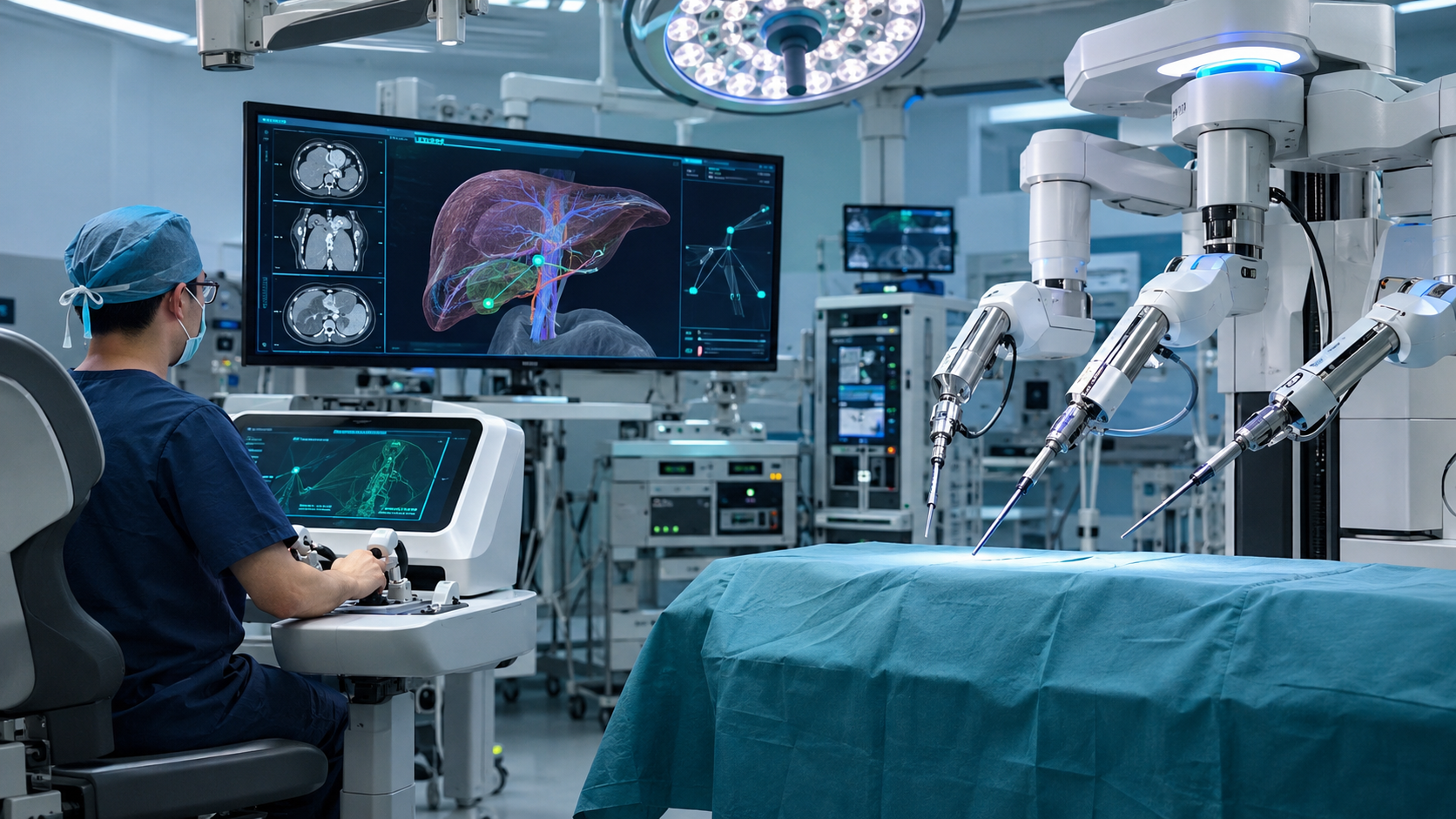
Artificial intelligence is an increasingly important research area in surgical robotics. It can help analyze surgical video, recognize patterns, support navigation, and provide feedback about surgical performance.
AI-Powered Surgical Imaging
Computer vision models can be trained to identify anatomical structures and surgical instruments in video.
Researchers are investigating how these tools can help surgeons interpret the operative field and receive context-aware information during procedures.
Surgical Skill Assessment
AI systems can analyze recorded surgical activity and selected performance measures to provide structured feedback during training.
Such tools may support education and skill development, but assessments require validation and should not be treated as definitive measures of a surgeon’s overall competence.
AI-Assisted Decision Support
Research systems may combine visual information, instrument tracking, and procedural context to alert a surgeon to relevant events or support decisions.
These systems must be carefully tested to avoid unreliable predictions, distracting alerts, or incorrect recommendations.
Autonomous Surgical Robots: What Is Possible Today?
A major research question is whether robotic systems can safely perform selected surgical subtasks with limited human intervention.
Some autonomous or semi-autonomous techniques have been demonstrated in experimental settings. However, their readiness varies substantially by task and medical specialty. Many soft-tissue autonomous surgical systems remain in preclinical research rather than routine clinical practice.
For the foreseeable future, a key development pathway is likely to involve AI that assists human surgeons with visualization, navigation, training, and risk awareness while keeping clinical control and accountability clearly defined.
Challenges and Limitations of Robotic Surgery
Despite its advantages, robotic surgery has important technical, financial, and clinical limitations.
High Equipment and Maintenance Costs
Robotic systems can require substantial initial investment, maintenance, specialized instruments, and staff training.
These costs may limit access in hospitals with constrained budgets. Whether a robotic approach is cost-effective depends on the procedure, local resources, patient outcomes, and the overall care pathway.
Specialized Training
Surgeons and operating-room teams require appropriate training to use robotic systems safely.
Learning to operate the console, manage instruments, recognize system limitations, and respond to unexpected events takes practice.
Technical Failures and System Reliability
Mechanical, software, imaging, or instrument problems can disrupt a procedure.
Hospitals need maintenance procedures, staff training, troubleshooting protocols, and contingency plans for situations in which robotic assistance becomes unavailable.
Limited or Variable Haptic Feedback
Some robotic systems provide limited direct tactile sensation compared with handling tissue using conventional instruments.
Engineers are exploring force sensors and haptic interfaces to improve feedback, but these capabilities differ across platforms.
Clinical Evidence and Patient Selection
The benefits of robotic surgery vary across procedures and patient groups. A technically advanced system does not automatically lead to better clinical outcomes.
Comparisons should consider complications, recovery, long-term outcomes, costs, and the performance of alternative techniques.
The Future of Robotic Surgery in Biomedical Engineering
The future of surgical robotics will depend on engineering innovation combined with clinical evidence and responsible deployment.
Smaller and More Flexible Surgical Robots
Researchers are investigating compact mechanisms, flexible instruments, and new approaches for reaching difficult anatomical locations.
Miniaturization may expand the range of tasks that surgical robots can perform, but it also introduces challenges involving strength, control, sensing, and safe interaction with tissue.
Real-Time Surgical Navigation
Future systems may combine medical imaging, tracking sensors, and computational models to provide more informative guidance during procedures.
Accurate navigation requires reliable registration between digital images and real patient anatomy, as well as methods for handling tissue movement and deformation.
Better Force Sensing and Tissue Interaction
Force sensing could help robotic systems estimate how instruments interact with tissue.
This information may support safer manipulation and more informative feedback, although measuring and interpreting forces in soft, moving tissue remains technically challenging.
Human-Robot Collaboration
An important direction is collaborative robotics, in which the system supports a surgeon rather than attempting to replace the surgeon.
Potential functions include motion guidance, instrument stabilization, anatomical highlighting, surgical training, and carefully validated safety alerts.
Remote and Connected Surgical Systems
Remote operation and telesurgery research explore how communication networks and robotic interfaces could support procedures across distance.
Such applications face challenges involving network latency, connection reliability, cybersecurity, regulatory requirements, and emergency response. Remote surgery is not simply a matter of connecting a robot to the internet.
Career Opportunities in Biomedical Engineering and Surgical Robotics
Robotic surgery brings together several engineering disciplines, creating opportunities for people interested in medical technology and healthcare innovation.
Relevant career paths include:
- Biomedical engineer
- Medical robotics engineer
- Surgical systems design engineer
- Robotics and control engineer
- Medical imaging engineer
- Computer vision or AI researcher
- Clinical engineering specialist
- Medical device verification and validation engineer
- Human-factors and usability engineer
- Research scientist in surgical robotics
Skills for a Career in Surgical Robotics
Useful foundations include mechanical design, electronics, programming, control systems, signal processing, medical imaging, and biomechanics.
Depending on the role, additional skills may include C++ or Python, robotics frameworks, computer vision, embedded systems, simulation, quality systems, and medical device safety standards.
Students can build a foundation through engineering coursework, supervised research, simulation projects, robotics laboratories, and collaboration with clinicians.
Frequently Asked Questions About Robotic Surgery
What is robotic surgery?
Robotic surgery is a surgical approach in which a surgeon uses a robotic system and computer interface to control specialized instruments during an operation.
How does robotic surgery work?
The surgeon controls instruments mounted on robotic arms through a console. A camera provides a view of the operative field, while software translates the surgeon’s commands into instrument movements.
Is robotic surgery better than traditional surgery?
Not in every case. The benefits depend on the specific procedure, patient, surgeon, robotic platform, and available alternatives. Patients should discuss the options with their healthcare team.
Does a robot perform surgery without a surgeon?
Most commonly used soft-tissue robotic surgical systems require direct surgeon control. More autonomous approaches are an active research area, but their clinical use remains limited and task-specific.
What is the role of biomedical engineers in robotic surgery?
Biomedical engineers help design, integrate, test, and improve surgical instruments, robotic mechanisms, sensors, imaging systems, control software, and safety features.
What are the main disadvantages of robotic surgery?
Potential limitations include high costs, specialized training requirements, technical failures, limited tactile feedback in some systems, and variable evidence of benefit across procedures.
How is AI used in robotic surgery?
AI is being researched and applied for tasks such as surgical image analysis, anatomical recognition, skill assessment, navigation support, and selected forms of decision assistance.
What is the future of surgical robotics?
Research is moving toward more intelligent assistance, improved sensing, flexible instruments, better navigation, and carefully validated automation. Progress will depend on demonstrating safety and meaningful improvements in patient outcomes.
Conclusion
Robotic surgery demonstrates how biomedical engineering can connect advanced technology with clinical practice. By combining mechanical systems, medical imaging, sensors, software, and surgeon-controlled interfaces, surgical robots can support complex procedures and minimally invasive techniques.
The next stage of development will involve improving reliability, reducing costs, strengthening clinical evidence, and developing AI tools that help surgeons make informed decisions.
For biomedical engineers, surgical robotics is an important field in which engineering design must meet the demanding requirements of patient safety, clinical effectiveness, and responsible innovation.
As the technology advances, its success will depend not only on how precisely a robot can move, but also on whether it improves outcomes that matter to patients.
References
https://www.fda.gov/medical-devices/surgery-devices/computer-assisted-surgical-systems
https://www.nature.com/articles/s44222-025-00294-6
https://www.nature.com/articles/s41585-026-01153-8
https://medlineplus.gov/ency/article/007339.htm
https://www.mayoclinic.org/tests-procedures/robotic-surgery/about/pac-20394974